
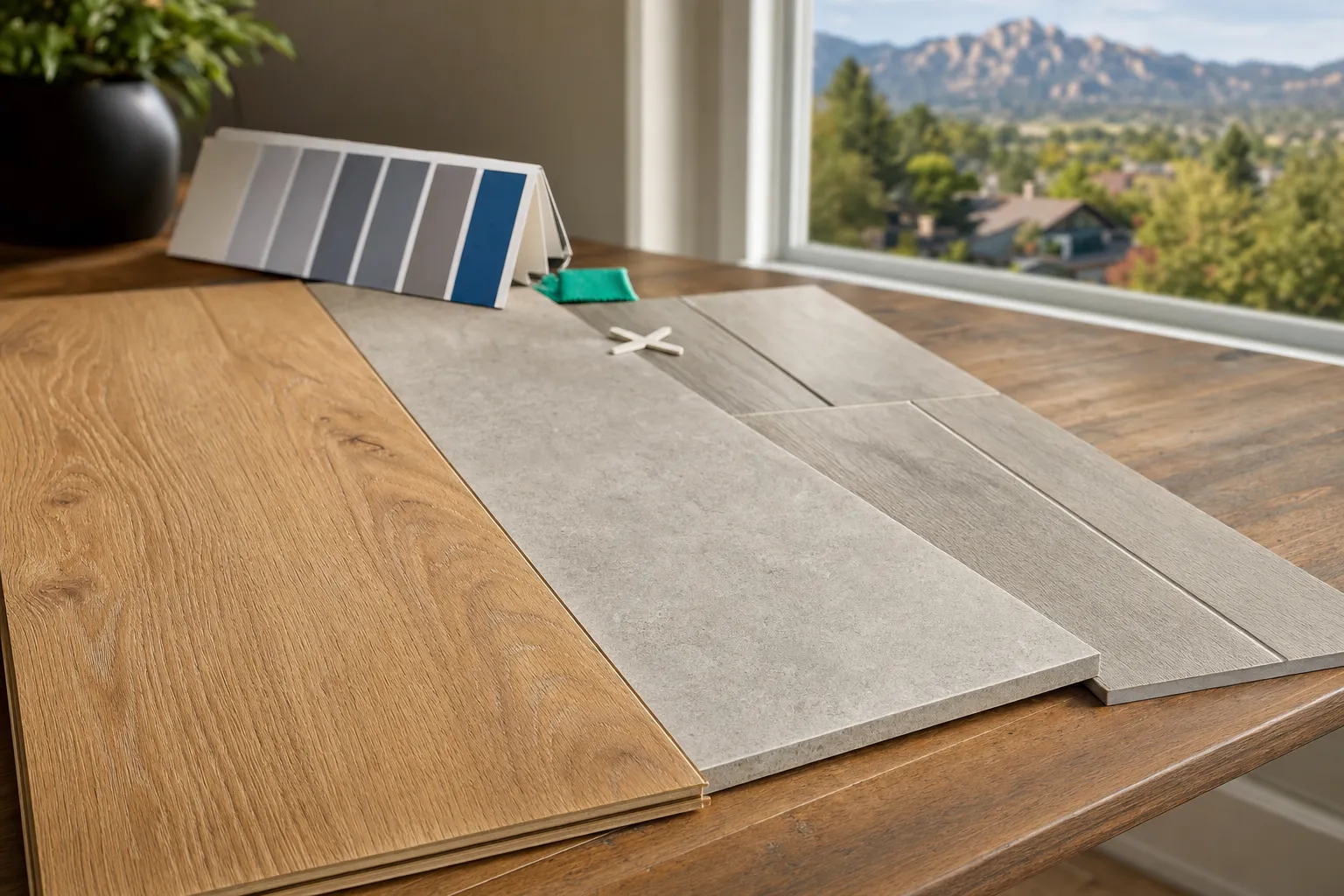
Flooring materials do not usually change how a fence stands, but they do affect site grading, drainage, transition details and the timing of fence work. We recommend coordinating flooring and fence work early so both trades avoid rework and so finished thresholds, exterior grading and water control work together.
Why flooring choices matter for a fence project
It helps to think about the property as one system, not two separate jobs. A new hardwood floor, luxury vinyl plank or tile can change how you want exterior thresholds, door clearances and final grade to look. If we do fencing first without knowing the finished floor height, you may end up with steps that are too tall, water pooling at the door, or a visible gap under the fence line where grading was adjusted later.
As a locally owned remodeler serving Colorado Springs since 2000, we coordinate flooring installation and fence installation so finished details line up and last through seasonal weather. We are licensed and insured and work with homeowners, landlords and property managers in Cimarron Hills and nearby neighborhoods.
Key technical connections between floors and fences
1. Finished floor height and exterior thresholds
The thickness of your flooring and the threshold style determine the exterior step height. For example, installing thick engineered hardwood or an underlayment can raise interior finished floor height by a half inch to more than an inch. That change affects whether you need a step down at sliding doors, a ramp, or a taller threshold at a side door. We measure and confirm finished heights before setting post locations near openings.
2. Drainage and grading
Flooring that requires a waterproof transition, like tile in a mudroom, makes proper exterior grade critical. A fence that changes surface runoff or forces water against a foundation can send water toward the house. We plan grading, guttering and exterior thresholds so water sheds away from doors and finished floors, limiting moisture risks to subfloors and finishes.
3. Subfloor and moisture control
Some flooring types are more sensitive to moisture than others. Engineered wood and hardwood need stable subfloors and a reliable moisture barrier. If fence excavation disturbs compacted soil near the foundation, it can change how quickly the soil dries and may affect crawlspaces or slab edges. We check moisture control plans during site prep and before fence post holes are dug.
4. Material compatibility at transitions
Transitions between indoor flooring and exterior surfaces should look intentional. Stone, tile and concrete thresholds pair well with metal or composite fence bases. Wood thresholds can complement wooden fences if both receive the right finish and flashing. We review material pairings to avoid maintenance headaches and mismatched expansion properties.
When to coordinate fence installation and flooring installation
Coordinate these projects when either work will change grades, door hardware or exterior finishes. Typical scenarios include:
- Replacing subfloor and finish flooring where exterior door thresholds are tight.
- Installing a new fence that follows the house foundation line or gate in line with an interior hallway.
- Planning a patio, doorway or exterior landing at a new finished floor elevation.
When projects overlap, we schedule demolition, framing, floor work and fence layout to reduce rework. That sequencing helps control costs and keeps timelines predictable.
Pro tip: Tell us about any planned floor finish before we set fence post lines. Even a half inch shift in finished floor height can change gate hardware and step risers.
How we coordinate projects on site
Here is our typical approach when a client needs both flooring and a fence. We explain roles and timing so you know what to expect.
- Measure existing conditions. We record door heights, slab edges, subfloor thickness and low spots around the foundation.
- Confirm finished flooring and thresholds. You pick a flooring material. We confirm its installed thickness and recommend underlayment and threshold details.
- Set rough elevations. We set a temporary reference line for finished floor height and mark gate swing and post locations relative to that line.
- Perform subfloor or concrete work first when needed. If subfloor replacement or slab grinding is necessary, we complete it so final floor elevation is fixed before fence posts are set nearby.
- Install fence with final inspection. Fence posts and gate hardware are installed to match finished thresholds and clearances. We check for drainage and add small adjustments if needed.
Common tradeoffs and what good looks like
Homeowners often ask whether to raise an exterior grade to match a new floor or to lower the interior finish to avoid steps. Each choice has tradeoffs.
- Raising exterior grade keeps interior thresholds low but can bring water closer to the foundation if not drained properly.
- Lowering interior finished floor may avoid exterior steps but can reduce insulation and affect baseboard heights and door clearances.
- Adding a small intermediate landing or adjustable threshold gives flexibility and makes gate hardware simpler to install.
Good results balance water control, accessibility and visual alignment. We document the chosen approach and check it against local conditions in Cimarron Hills.
Watch out: Never assume exterior grading will stay the same during a remodel. Compacting, added soil or a new patio can change how water flows near the house. Always confirm final grades before finishing sensitive flooring.
Materials and maintenance considerations
Different flooring materials create different expectations for nearby exterior materials and fence maintenance.
Wood and engineered wood flooring
Wood floors need stable, dry conditions. If a wooden privacy fence uses untreated lumber and is close to the house, rot or staining can transfer to exterior trim. Consider pressure treated posts, composite rails or metal post bases where soil contact is likely.
Tile and stone
Tile near exterior doors often needs a waterproof threshold and a small taper to shed water. Metal or composite fence base materials reduce corrosion risk where deicing salts are used on paths.
Vinyl plank and resilient floors
These floors tolerate more moisture but still need well-drained thresholds. Gate hardware that drags on an exterior sill can punch holes in vinyl over time. We set clearance recommendations during layout.
A practical checklist before scheduling fence work
Pre-fence checklist when you are changing floors
- Confirm finished flooring type and installed thickness with your flooring contractor.
- Mark final interior finished floor elevation on a wall near entry doors.
- Inspect and plan for exterior grade changes, patios or walkways that could alter drainage.
- Decide on threshold type and gate swing direction before setting post locations.
- Note any finish or trim materials that might be stained or damaged during fence excavation.
- Plan post locations to avoid cutting through new concrete or finished exterior paving.
How fences, roofing repair and drainage connect
Roof runoff, gutter placement and downspout discharge affect both flooring and fence performance. A new fence should not block a downspout or force water into a low spot near a door. If you are planning roofing repair or new gutters at the same time, we coordinate those trades so water is carried away from doors and finished floors. Learn more about our roofing work on our Roofing Repair service page.
We also document trade coordination for property managers and vacation rental hosts to limit downtime between jobs.
Key takeaway
Flooring choices do not determine whether a fence will stand, but they shape thresholds, grading and drainage. Coordinate flooring installation and fence layout early so thresholds, gate hardware and finished grade work together. We handle that coordination in Cimarron Hills to reduce rework and protect your finishes.
Frequently asked questions
Should I install the fence before or after new floors?
We usually fix the finished floor elevation before installing fence posts that are close to doors or gates. That way gate hardware and thresholds match the final floor. If the fence line is far from openings and will not affect grade, timing is more flexible.
Will fence posts damage a new concrete slab or exterior paving?
Fence posts placed near a slab edge can require core drilling or surface-mounted post bases. We layout post locations to avoid cutting through newly poured concrete whenever possible. If a post must be installed after a slab is poured, we use appropriate fasteners and flashing to preserve the slab and waterproofing.
Do certain flooring materials require different gate hardware?
Yes. Thicker finishes or added underlayment reduce clearance under a gate. For thick flooring, we specify adjustable hinges or a slightly lifted gate beam so the gate swings freely without scraping the threshold.
Can a fence influence indoor moisture problems?
A fence can alter surface runoff and reduce evaporation if it creates a shaded, enclosed strip of soil. That effect can increase moisture near foundations or under eaves. Proper grading, gutters and landscape drainage prevent moisture migration toward the house and finished floors.
Do you handle both flooring installation and fence installation?
We perform flooring installation and coordinate with fence installation as part of our remodeling services. For standalone fence construction, we also work with trusted fence installers and coordinate schedules and elevations to match your finished floors.
Learn more and check our local reviews
See how we coordinate flooring and exterior work by viewing our Flooring Installation service page, our Fence Materials topic page and our Cimarron Hills location page. Read customer reviews and get directions from our Google Business Profile for Homestead Improvements.
Flooring Installation · Fence Materials · Cimarron Hills, Colorado
For an overview of our services and local coverage, see our Services hub, Topics hub and Locations hub.