
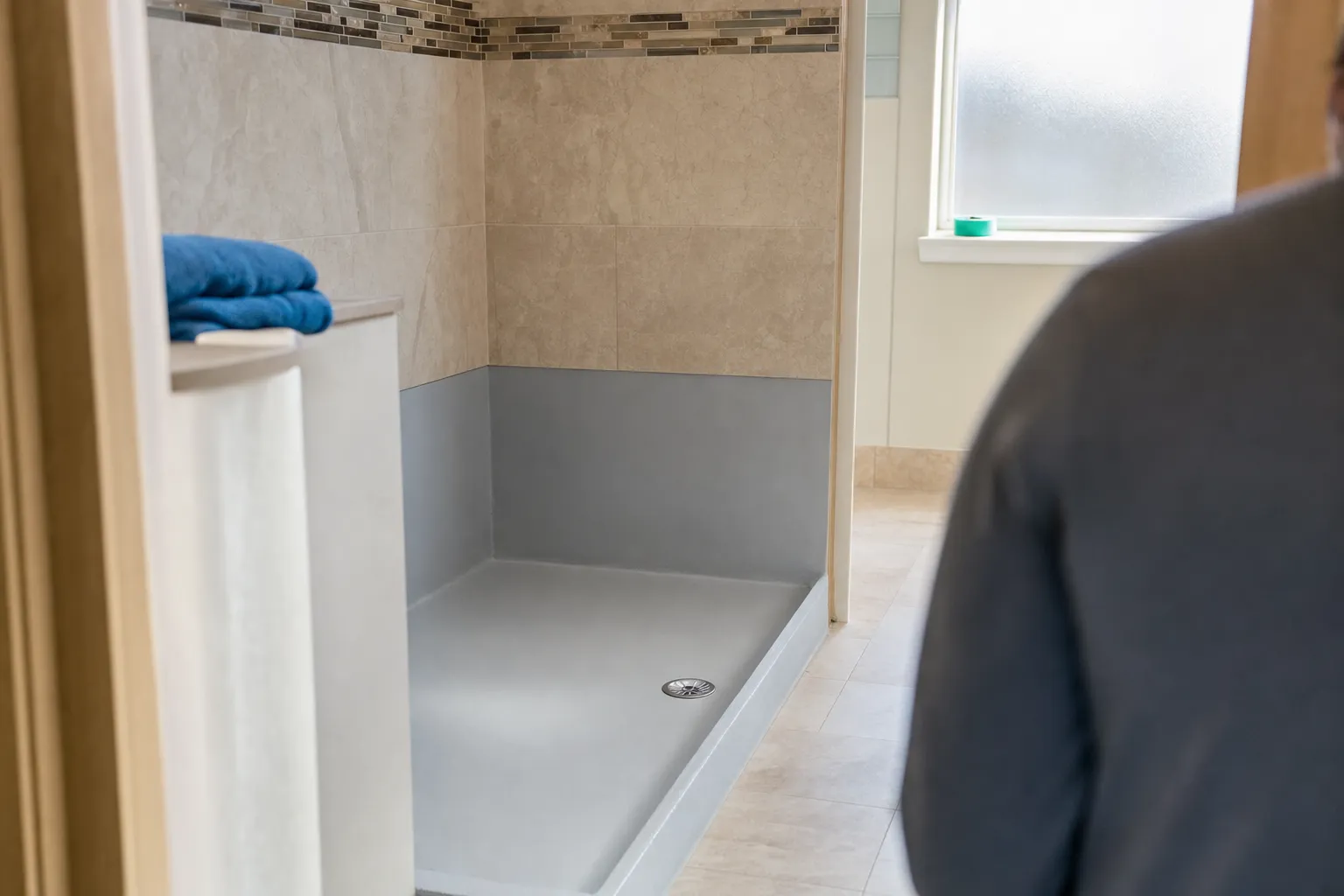
"Waterproof substrates control where moisture goes under and behind tile, and choosing the right one for the location is essential to preventing leaks, mold and tile failure." We answer this first because it is the simple fact that guides every tile installation decision we make in Woodmen Valley.
What a waterproof substrate is and why it matters
A waterproof substrate is the layer under tile that either resists water or channels it safely to a drain. In wet areas such as showers and tub surrounds, the substrate keeps moisture out of framing, insulation and subfloors. In floors and entryways, it reduces the chance that moisture will weaken the bond between tile and mortar.
For homeowners in Woodmen Valley and the greater Colorado Springs area, seasonal humidity changes, freeze thaw cycles and older framing assemblies make the substrate choice especially important. We install tile to last, and that starts with picking a substrate that matches the wetness risk and the structure under the tile.
Key concepts to understand
- Waterproof layer versus water resistant layer. Some systems, like continuous membranes, are waterproof. Cement backer boards are water resistant but need a membrane to be fully waterproof.
- Bonding and movement. Substrates must accept thinset or mortar and allow for small building movements without cracking tile or grout.
- Vapor control and weep paths. In shower pans and some wall assemblies, how water escapes is as important as stopping it from entering framing.
- Manufacturer instructions. Tile manufacturers and membrane makers provide methods and limits we follow to keep warranties valid.
Common substrate options and how they compare
Below we compare the common approaches we evaluate on a project. The comparison focuses on typical indoor residential use, not commercial or industrial settings.
| Type | Where we use it | Notes |
|---|---|---|
| Cement backer board | Wall backer in tub surrounds, interior floors with low moisture risk | Stable and water resistant, needs a waterproof membrane on wet walls or shower pans to prevent water reaching framing. |
| Sheet or liquid waterproof membrane | Shower walls and pans, steam rooms, wet rooms | Creates a continuous waterproof barrier when installed per manufacturer instructions. Critical for preventing leaks into framing. |
| Uncoupling membrane such as Ditra | Floors, especially radiant heat systems and tile over plywood | Helps manage movement and moisture from below. Some products also include vapor channels to protect thinset bond. |
How we evaluate a job in Woodmen Valley
When we inspect a bathroom or kitchen for tile work, we look at the following factors before choosing a substrate system.
- Existing substrate type and condition, including any previous water damage.
- Level of exposure to direct water, steam or humidity.
- Floor framing and deflection criteria that affect tile bonding.
- Tile size and weight, and whether stone or large format tile will be used.
- Drain and waterproofing details if this is a shower or wet room.
Checklist: questions to ask before installation
Use this on every project
- Is this a wet area that needs a continuous waterproof membrane?
- Is the existing subfloor stiff enough for the tile size and type?
- Will we need an uncoupling membrane for movement control or radiant heat?
- Are we following the tile and membrane manufacturer installation instructions?
- Are there signs of previous moisture intrusion that need repair first?
Pro tip: For showers we follow membrane manufacturer details for seams and penetrations. Small errors at corners and fittings cause most leaks, so workmanship there matters more than the brand name of the product.
Related services and how they connect
Tile success often depends on nearby trades. We coordinate with other services we offer when a substrate issue overlaps another scope of work.
- Flooring Installation, when tile ties into existing floors and transitions are required. See our Flooring Installation page for typical interfaces with tile.
- Roofing Repair, when exterior leaks or flashing failures have allowed moisture into wall assemblies that later affect tile walls or floors.
- Drywall Repair and Bathroom Remodel, when we need to strip back finishes and rebuild a stable, waterproof substrate before tiling.
To read more about membrane choices we maintain a focused guide on our site about waterproof substrates.
Waterproof Substrates topic, Tile Installation service, Colorado Springs location
Helpful resources and standards
We follow industry guidance and manufacturer data for installation methods. Two useful references are the Tile Council of North America for published installation methods, and manufacturer documentation for specific membranes and uncoupling products. For an academic overview of principles behind tile installation, university extension materials explain fundamentals of substrates and moisture control.
Recommended reading from authoritative sources includes the Tile Council of North America installation methods and specific membrane manufacturer guides for product limitations and compatibility. These sources explain why a method that works for a dry floor will not work in a shower.
Frequently asked questions
Do all showers need a waterproof substrate?
Yes, showers require a continuous waterproofing approach for walls and pans. That can be a bonded membrane, a liner system with a proper pan, or a waterproof board system installed per manufacturer instructions. The goal is to stop water from reaching framing and insulation.
Can I tile over existing vinyl or linoleum?
Usually not without addressing the substrate. Vinyl can trap moisture and move under tile. We inspect the subfloor and often remove old floorcoverings, repair or replace the substrate, and then install an appropriate underlayment or membrane before tiling.
What about large format tile and movement?
Large format tile is less tolerant of substrate deflection and movement. We verify the floor stiffness and may specify an uncoupling membrane and reinforced thinset to reduce risk of cracking.
Where can I learn more about installation standards?
Consult the Tile Council of North America for standard installation methods and the specific membrane manufacturer technical documentation for product instructions. Those documents explain the allowable applications and preparation steps we follow.
Learn more and check our local profile
For project examples and local reviews, check Homestead Improvements on Google Business Profile to read customer experiences and get directions.