
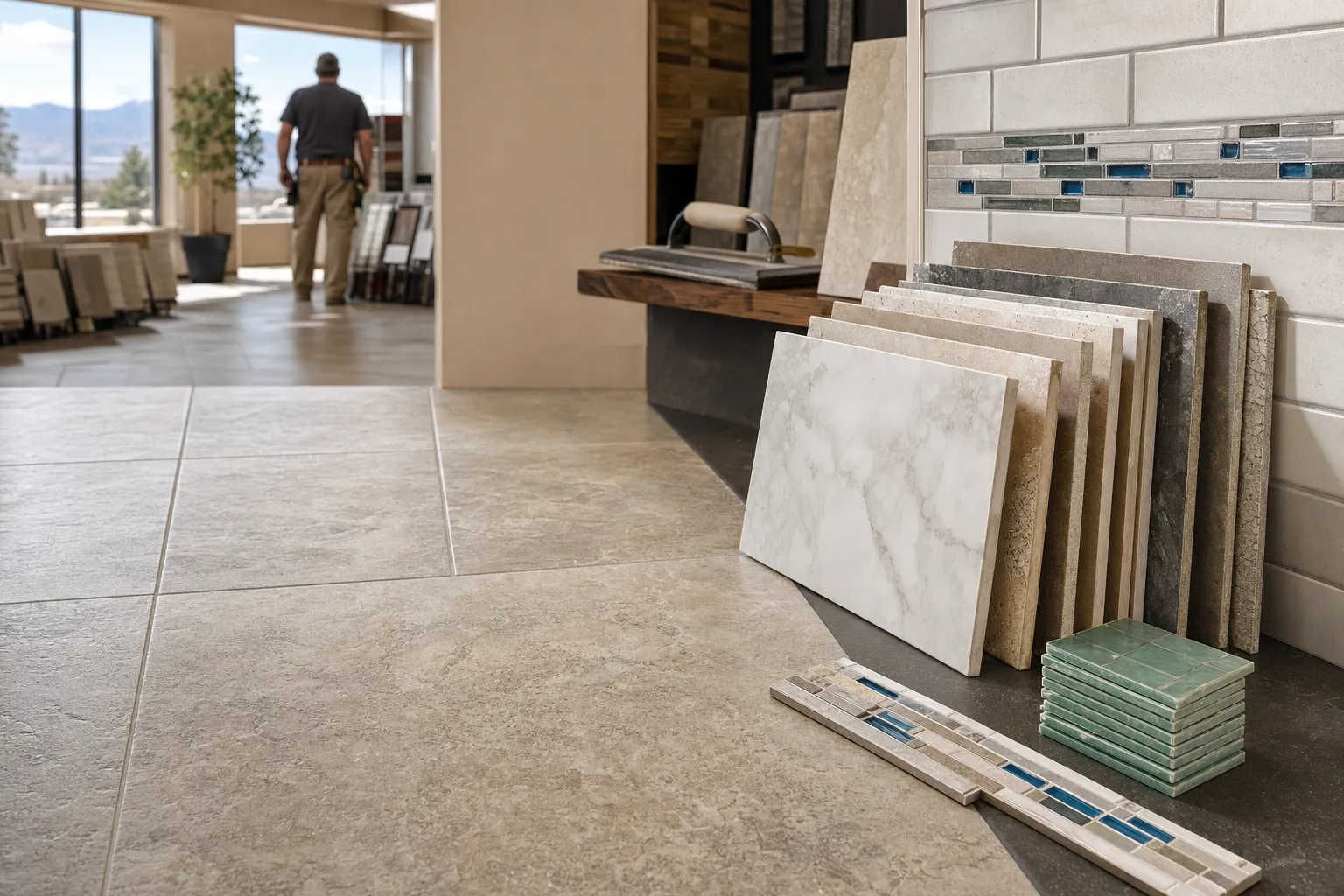
A strong tile installation plan begins with choosing the right tile material for the room, matching that choice to a properly prepared substrate and including a clear plan for layout, grout and long term care. We prioritize material properties, local climate factors and the end use so the tile performs for years in Air Force Academy, Colorado.
Why materials matter more than style alone
Tile is a long term finish. The tile you see in a showroom may look similar to another option, but differences in composition, porosity, strength and slip resistance change how the tile performs. For example, porcelain tiles are denser and less porous than many ceramics, which affects water resistance and freezing performance outdoors. Natural stone tiles bring depth and variation, but they also need sealing and more careful substrate work.
When we plan a tile job we assess three things first: the room use, moisture exposure and the existing substrate. Those three decisions narrow which materials make sense and which will create extra work or maintenance later.
Common tile materials and where we use them
Ceramic tile
Ceramic is a clay based tile with a glaze finish. It is generally lighter and less dense than porcelain. Ceramic works well on interior walls, kitchen backsplashes and low traffic floors that do not see regular water exposure. Ceramic tiles are cost effective, widely available and easy to source in many patterns and colors.
Porcelain tile
Porcelain is fired at higher temperatures and is denser and less porous than typical ceramic. Porcelain is our preferred choice for most floors, wet rooms and areas that need a hard wearing surface. For exterior patios and entryways where freeze thaw cycles matter, porcelain is often the safer option because it resists water absorption.
Natural stone
Natural stone covers materials such as slate, travertine, marble and limestone. Stone brings unique veining and texture, but it is more variable from tile to tile and usually needs sealing and a matched mortar system. For bathrooms and kitchens, stone gives a premium look but requires a clear plan for cleaning and maintenance to avoid staining and etching.
Cement and encaustic style tiles
Cement tiles and encaustic style tiles are decorative and durable when installed correctly. They are often more porous and usually require sealing after installation. These are great for entry floors and feature areas where a bold pattern is desired, but they add steps to the installation plan because of sealing and surface care.
Glass and mosaic tiles
Glass tiles make strong backsplashes and shower accents. They are non porous and easy to clean, but they require precise substrate flatness and adhesives suited to glass. For mosaics, plan grout color and finishing to avoid excessive staining in high use areas.
How local climate in Air Force Academy affects material choice
Air Force Academy sits at higher elevation near Colorado Springs and faces wide temperature swings, strong sun and winter freeze. Those conditions influence outdoor and semi exterior tile choices more than indoor selections.
- For exterior or covered patios choose tiles with low water absorption and good frost resistance, commonly porcelain rated for exterior use.
- For interior floors with heated slabs, verify the tile coefficient of thermal expansion and use products approved for thinset over radiant heat.
- In bathrooms plan grout and sealers that stand up to hard water and mineral deposits common in this region.
Substrate and moisture control: what the materials require
No tile material performs to its potential on a poor substrate. A strong plan names the exact substrate and moisture control method needed for the chosen tile.
We check for flatness, structural deflection, existing water damage and compatibility of current floor coverings. Some substrates demand a cement backer board or a waterproof membrane before tile goes down. For wet areas we prefer systems that separate the tile from direct water exposure with a tested membrane and drainage approach.
For more on subfloor expectations and preparation, see our article on subfloor preparation. For membranes and surface waterproofing read about waterproof substrates, which we reference when planning wet area installations.
Pro tip: Match tile porosity to the exposure. Low porosity tiles reduce the need for heavy sealing in wet areas, but the best result comes from pairing the tile with the correct membrane and grout system.
Layout, grout and edge details that protect your tile
Material choice is one part of the plan. The layout, grout joint width, grout type and edge trim also determine how resilient the finished floor or wall will be.
Large format tiles need flatter substrates and tighter joints. Natural stone with variation often benefits from wider grout joints and a more forgiving layout. For exterior thresholds and changes in plane we plan transitions and expansion joints to avoid cracking where different materials meet.
Grout selection matters. Cementitious grout is common for general use, while epoxy grout offers superior stain resistance in kitchens and mudrooms. Grout color affects maintenance too. A darker grout can hide dirt, while a lighter grout may need regular cleaning in high traffic areas.
Learn more about planning tile patterns and alignment in our tile layout guidance.
How we evaluate materials on site
When we consult on materials we follow a consistent checklist so clients understand trade offs. We do not just pick a tile because it looks good. We look for compatibility with the substrate, the intended traffic, moisture exposure, maintenance expectations and local climate.
- Room function and traffic level.
- Existing substrate type and condition.
- Moisture exposure, including showers, entryways and laundry rooms.
- Desired slip resistance, especially on ramps, entries and outdoor steps.
- Maintenance preferences from the homeowner or property manager.
Quality markers and questions to ask when selecting tile
When you evaluate tile samples, ask these practical questions. Answers show whether the product fits your plan.
- What is the water absorption rating or porosity percentage?
- Is the tile rated for floor, wall or exterior use?
- Are there manufacturer installation instructions and recommended mortars or membranes?
- What grout joint width and type does the manufacturer recommend?
- Does the finish offer a tested slip resistance rating for wet areas?
Material care and long term maintenance
Different materials age differently. Porcelain and glass are easy to keep clean. Natural stone may need periodic sealing. Cement tiles often require an initial sealer and ongoing maintenance to maintain color and protect against stains.
We always include a maintenance plan in our project notes so property managers and homeowners know what to expect after installation. That plan covers recommended cleaners, re sealing intervals and procedures for grout care that preserve appearance and performance.
Watch out: Choosing a decorative tile without confirming the substrate and mortar compatibility can lead to delamination and premature failure. Aesthetic match is important, but it must come with a technical match.
Decision checklist before you finalize materials
Material selection checklist
- Confirm the tile is rated for the intended location, including exterior use if applicable.
- Request manufacturer installation instructions and compatible mortar and grout types.
- Check porosity and slip resistance ratings for the expected conditions.
- Verify the existing substrate and plan substrate updates if flatness or strength is insufficient.
- Plan grout color and sealing requirements with maintenance expectations.
How Homestead Improvements integrates materials into a project plan
We have remodeled homes in Colorado Springs since 2000. When we handle tile work we coordinate trades, test substrates, and document the material choices along with manufacturer directions. If a project requires specialized tile setting we bring the appropriate subtrade and manage the schedule so the rest of the remodel stays on track.
For a deeper look at the service we provide, see our Tile Installation page at Homestead Improvements Tile Installation.
When projects include adjacent trades such as drywall or roofing repair we sequence work to protect finishes and avoid rework. For example, roof leaks must be fixed before bathroom tile goes in, and drywall work should be completed ahead of full tile installation in open remodels.
Standards and industry guidance we follow
We use manufacturer installation guides and consensus documents when planning materials and methods. The Tile Council of North America publishes technical guidance used across the industry for setting, membranes and grout selection. For information on labor and trade practices we reference Bureau of Labor Statistics data for tile and marble setters to understand local workforce trends.
When a manufacturer publishes a specific mortar or membrane requirement we follow that instruction rather than substitute by guesswork. Following specified materials and referenced standards reduces callbacks and improves long term performance.
Key takeaway
Choosing the right tile material for your room, matching it to a prepared substrate and following manufacturer and industry guidance are the core pieces of a reliable tile installation plan in Air Force Academy Colorado. The best outcomes come from matching use and maintenance expectations to the material, and documenting those decisions before work begins.
Frequently asked questions
Which tile is best for bathroom floors in Air Force Academy?
For bathroom floors we typically recommend a low porosity tile with adequate slip resistance. Porcelain is a common choice because it resists water absorption and stands up to cleaning. The final selection depends on intended finish, grout type and whether the floor has radiant heat.
Can natural stone be used in a shower?
Yes, natural stone can be used in showers, but it requires a waterproofed substrate, the right mortar and a sealing plan after installation. Stone is more variable than manufactured tile, so layout and grout decisions should consider the stone character and maintenance needs.
How do I know if an exterior tile is frost resistant?
Manufacturers provide water absorption values and exterior ratings. Tiles intended for freeze thaw conditions are low porosity and often tested for frost resistance. We confirm manufacturer specifications and, when in doubt, choose porcelain products designed for exterior use.
Do I need an expansion joint for large format tile?
Large format tile and long runs of tile typically require control joints or transitions to accommodate movement. The manufacturer and industry guidance outline recommended joint spacing. We plan joints during layout so they align with room geometry and transitions.
Where can I read more about tile layout and subfloor preparation?
We have on site resources that explain practical layout choices and substrate expectations. See our pages on tile layout and subfloor preparation for step oriented guidance and illustrations.
Learn more and check our local profile
For reviews, directions and recent project photos check our Google Business Profile, read customer reviews and get directions. To dive deeper into related topics browse our Tile Layout guidance, our Tile Installation service page, or our location page for the Air Force Academy area.
Tile Installation · Tile Layout · Air Force Academy location