
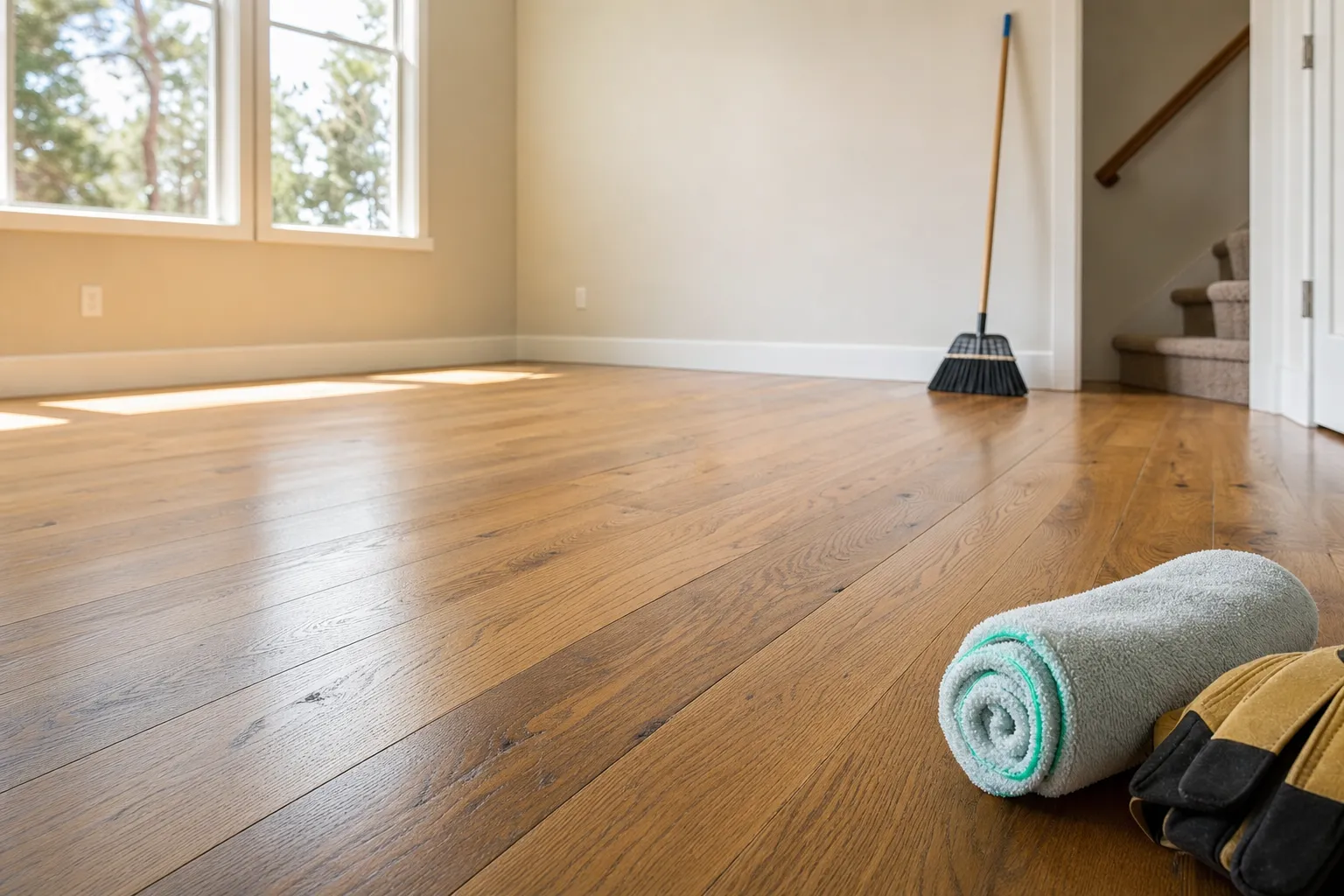
We review floor maintenance by inspecting surface condition, testing moisture and substrates, identifying safety and performance issues, and producing a clear maintenance plan that lists immediate repairs and long term care. That summary is the quick answer. Below we explain each step, what it means for your home in the Air Force Academy area, and what good maintenance looks like.
What is floor maintenance and what we review
Floor maintenance covers the work needed to keep finished floors safe, durable and attractive. That includes routine cleaning and protection, small repairs to surface finishes or grout, testing for moisture or adhesive failures, and planning restorations such as sanding, recoat or replacement.
When we review a floor we look beyond the visible surface. We examine the finish, the tile grout or plank seams, the condition of transitions and thresholds, the flatness of the substrate, and any signs that water or movement has compromised the installation.
Why this matters in Air Force Academy and Colorado Springs
Local weather and building patterns change how floors age. Seasonal temperature swings, lower relative humidity and high sun exposure in the Colorado Springs area all affect wood movement, finish wear and adhesive performance. That makes regular, informed reviews important for long term performance.
Homes used as short term rentals or managed by property owners need more frequent checks because turnover, heavier foot traffic and luggage carts increase wear on finishes and transitions.
Key concepts we check on every review
- Surface condition: finish wear, scratches, stains and loose tiles or planks
- Moisture and vapor: moisture mapping for concrete slabs and relative humidity checks for hardwood
- Substrate flatness and stability: squeaks, dips, delamination and soft spots
- Adhesion: whether tile, vinyl or engineered plank is still bonded to the subfloor
- Grout and sealant condition: cracks, missing joints and failed caulk at fixtures
- Transitions and thresholds: metal strips, reducers and door clearances
- Traffic patterns and protection needs: entry mats, runners and furniture pads
- Cleaning and product compatibility: whether existing maintenance products are safe for the material
Step by step: how we perform a floor maintenance review
- Intake and history. We start by asking about known issues, recent spills, repairs and how the space is used. For rental units we note turnover frequency and any guest complaints.
- Visual surface inspection. We walk the space and document visible wear, scratches, loose tiles or gaps. Photos are taken for the report.
- Moisture screening. We use non invasive meters to screen for abnormal moisture. If readings are elevated we recommend follow up with quantitative testing or a manufacturer recommended protocol.
- Substrate and flatness check. We check for soft spots, movement and levelness at transitions. Floors that are out of tolerance for the finish can cause cracking or failure later.
- Adhesive and fastener assessment. For glued or nailed installations we look for partial delamination, nail pops or adhesive failures at seams and edges.
- Finish and coating evaluation. We test the finish to learn whether a recoat, full refinish or spot repair is appropriate. That includes testing product compatibility for future maintenance.
- Grout, sealant and perimeter checks. We inspect grout joints and perimeter caulk for cracking, staining and water entry points, especially near fixtures and exterior doors.
- Trip and safety hazards. Raised transitions, torn edges and loose tiles are flagged for immediate correction if they present safety concerns.
- Cleaning test and residue check. We verify whether current cleaning methods are leaving residues that accelerate wear or attract slip hazards.
- Prioritization and repair plan. We classify items as immediate, near term and long term, and outline reasonable interventions for each class.
- Estimate of expected life and maintenance schedule. For each floor material we provide realistic expectations for service life and a suggested maintenance cadence, such as annual deep clean for tile or periodic recoats for engineered wood.
- Documentation and recommendations. We deliver a written report with photos, the testing results and a simple decision matrix that explains tradeoffs between spot repairs, refinishing, and replacement.
What good looks like for common floor materials
Understanding material specific markers helps you judge whether a repair is cosmetic or structural.
- Engineered hardwood and solid wood. Expect surface scratches and finish wear over time. Look for cupping, excessive gaps or white stains that suggest moisture issues.
- Luxury vinyl plank and sheet vinyl. Good installations remain flat and bonded. Edge lifting and permanent stains usually indicate adhesive or substrate problems.
- Ceramic and porcelain tile. Cracked tiles, loose tiles and grout deterioration point to substrate movement, impact damage or improper installation.
- Carpet. Pay attention to seam separation, pad breakdown and localized wear patterns that show traffic concentration.
Pro tip: Save any product labels, receipts or installation documents you have. Manufacturer care instructions can change the recommended maintenance path, and we use that information to avoid voiding warranties.
Tools and tests we use
We match the test to the material and concern. Typical tools and checks include:
- Non invasive moisture meters for quick screening
- Relative humidity in room checks for hardwood care
- Floor level and straightedge checks for flatness
- Adhesion spot tests for glued floors where safe
- Finish compatibility swabs and small surface tests
- Photographic documentation and annotated diagrams
When to choose spot repair, recoating or full replacement
| Option | When to choose it | What to expect |
|---|---|---|
| Spot repair | Localized damage, single tile or plank, small gouges | Lower cost, quick return to service, may show visible differences |
| Recoating or refinishing | Widespread finish wear but sound substrate | Restores appearance, extends life, requires downtime for cure |
| Full replacement | Chronic moisture, substrate failure, or when layout or material must change | Highest cost and longest downtime, resolves recurring problems |
Common homeowner objections and how we address them
We hear the same concerns. Here is how we respond in practical terms.
- It looks fine to me. Small surface issues can be signs of larger problems. Our report separates cosmetic from structural concerns so you can decide with facts.
- I only want a quick fix. We explain the tradeoffs between a quick cosmetic repair and a more durable solution that prevents repeat visits.
- I do not want the disruption. We suggest staging and scheduling options that limit downtime, such as working per room or during low occupancy windows for vacation rentals.
How maintenance reviews tie into flooring installation and other services
Reviews often lead to work that we perform or coordinate. For major restorations we draw on our experience in Flooring Installation and related trades. If the review uncovers water entry or ceiling stains we link the findings to drywall and roofing work and coordinate as needed.
We also use guidance from industry sources when recommending care products. For tile care we refer to guidance from the Tile Council of North America at https://www.tcnatile.com for manufacturer recommended cleaning and sealing practices.
Preparation checklist for a review
Before our visit
- Clear loose furniture from the area if possible
- Gather any existing installation or warranty paperwork
- Note recent incidents like spills, roof leaks or HVAC work
Watch out: Never attempt to perform a moisture cure or invasive testing without the right equipment. Incorrect testing can damage finishes and provide misleading results.
Related services and resources
Reports from a maintenance review commonly link to work we provide, such as Roofing Repair if water entry is suspected, or drywall work when substrate damage reaches walls. For seasonal upkeep recommendations see our topic on Seasonal Maintenance.
For material specific topics we link owners to our coverage of setting and grouting for tile at Setting And Grouting and tile sealing best practices at Tile Sealing.
Local considerations for the Air Force Academy area
Homes near the Air Force Academy and greater Colorado Springs may face more UV exposure and wider daily temperature swings than coastal markets. That influences finish selection and the recommended maintenance cycle for wood and some vinyl products.
For homeowners in the neighborhood we provide a location specific review and note when a material will react to our regional climate. See our Air Force Academy location page for area specific guidance at Air Force Academy, Colorado.
How we document and hand off findings
We produce a concise report that includes photos, test results, a priority list and suggested timelines. For property managers and vacation rental owners we add simple maintenance tasks that can be performed between professional visits.
When a manufacturer warranty or care instruction applies we cite that guidance. For background on common floor types see the general reference at https://en.wikipedia.org/wiki/Floor.
Key takeaway
A thoughtful maintenance review is more than a surface check. It finds moisture and substrate issues early, documents safety items, and creates a practical plan so owners can choose spot repairs, refinishing or replacement with confidence.
Frequently asked questions
How often should we schedule a maintenance review?
For most owner occupied homes an annual review is sufficient. For high turnover rentals or heavy commercial like use we recommend a review every six months to catch accelerated wear and guest related damage early.
Will you perform invasive moisture testing during a review?
We begin with non invasive screening. If readings indicate an issue we will recommend quantitative testing that follows manufacturer protocols. Some tests require small access points or lab analysis and are scheduled separately.
Can a maintenance review force me to replace flooring?
No. A review gives you options. We explain the tradeoffs and typical lifespans so you can decide between repair, recoating or replacement based on condition and budget.
Do you coordinate repairs with other trades?
Yes. When a floor issue overlaps with roofing, drywall or plumbing concerns we coordinate the needed trades and manage the sequence so repairs are done once and done correctly.
Learn more and read our reviews
Read customer experiences and get directions from our Google Business Profile to see recent work and reviews. You can also learn more about our flooring services, related topics and the Air Force Academy area pages on this site.
Flooring Installation | Seasonal Maintenance | Air Force Academy, Colorado