
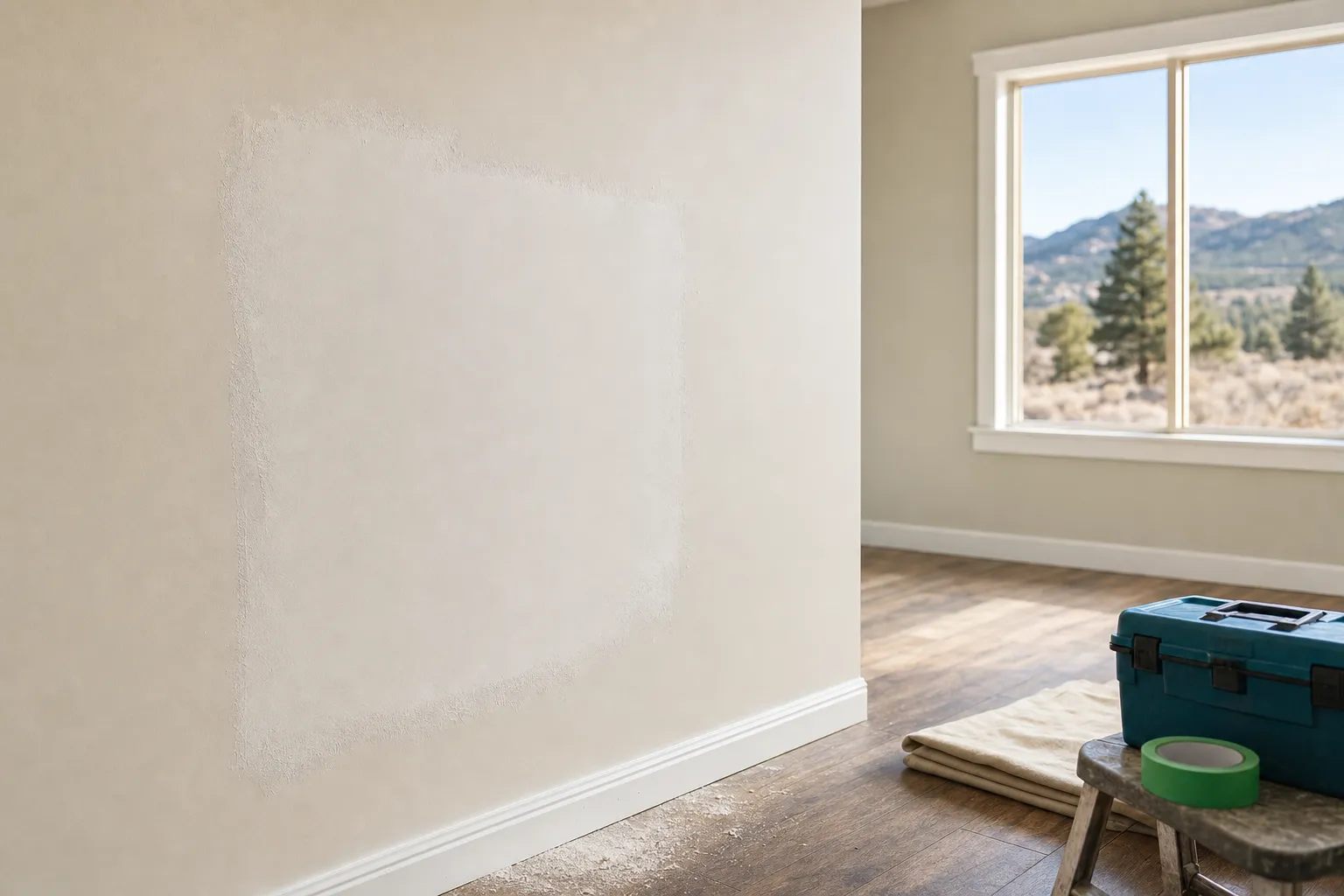
Drywall repair needs differ across the Air Force Academy area mainly because of elevation driven temperature swings, local weather like hail and heavy snow, and the variety of building types from wartime era homes to modern townhomes. We inspect the cause of damage, the wall assembly, and finish level before recommending repair or replacement, because the right approach depends on those local factors.
What is drywall damage assessment
Drywall damage assessment is the process we use to determine the extent of harm to gypsum board and the surrounding structure, identify the cause, and decide whether a patch, a larger replacement, or full wall replacement is the appropriate solution. Assessment looks beyond visible holes and cracks to check for moisture intrusion, fastener pull out, compromised framing, and texture or paint match issues.
Why it matters in the Air Force Academy and Colorado Springs
Local conditions change what we look for and how we repair. In our area, higher elevation causes larger daytime to nighttime temperature swings and stronger sun exposure. Weather events such as hail, heavy snow and sudden thaws increase the risk of roof and exterior leaks, and those leaks often show up later as stains, soft drywall or hidden mold risk.
Different neighborhoods and building eras use different materials and assemblies. Older homes may have plaster or layered wall systems. Newer construction might have lighter gauge framing and paperless or mold resistant drywall in bathrooms. A one size fits all repair can lead to visible seams, texture mismatch, or repeated failures, so we match the repair to the local building type and expected finish level.
Key concepts we use when assessing drywall
- Cause first. We identify whether the damage came from impact, moisture, settlement, or HVAC issues before deciding on a fix.
- Wall assembly matters. Knob and tube, plaster over lath, conventional gypsum board, and moisture rated board perform differently and require different techniques.
- Finish level. Matching the room finish, from smooth modern walls to orange peel or heavy knockdown textures, determines how invasive the repair must be.
- Moisture and mold risk. Water damaged drywall often needs partial or full replacement and a moisture source repair to prevent recurrence.
- Thermal and structural movement. Freeze thaw and foundation settlement can reopen cracks if the underlying cause is not addressed.
How local factors change the repair approach
Elevation and temperature swings
At higher elevations we see more pronounced expansion and contraction in framing and finishes. That makes long taping runs more likely to show hairline cracks over time. For these areas, we prefer reinforced taping and slightly different joint compound sequencing to reduce future cracking.
Weather related damage
Hail, wind and snow can drive hidden leaks from the roof or flashing into wall cavities. When we suspect an exterior leak we coordinate inspections with roofing and flashing checks to find the source before repairing the drywall. If you want background on diagnosing storm related building damage, our notes on storm damage assessment explain common paths for moisture intrusion.
Construction type and age
Older plaster walls or walls with multiple finish layers require different removal and match techniques than single layer gypsum board. We document the wall assembly with photos and measurements so the finished patch sits flush and the texture blends with the surrounding surface.
Common signs we look for during an inspection
- Soft or sagging drywall that indicates prolonged moisture exposure.
- Discolored stains or coppery edge staining that suggest a leak path.
- Cracks that track from door frames, windows, or across long seams that hint at structural or settlement movement.
- Paint or texture mismatch that will be noticeable after repair unless blended correctly.
- Fastener pops and seam separation caused by framing movement or poor initial installation.
When to patch and when to replace
We decide between patching and replacing based on damage size, location, and the condition of surrounding materials. Small impact holes and nail pops are usually patched. When more than a single stud bay is compromised, or when moisture has softened the board and insulation, we replace the affected board sections and inspect the cavity.
Repair decision checklist
- Small surface dent or hole under 3 inches, dry, no stain: patch and sand.
- Hole 3 to 12 inches or edge damage near a seam: cut back to studs and replace panel section.
- Large area of soft or delaminated board, persistent staining, or visible mold growth: remove affected material, verify dryness, and replace with appropriate board type.
- Texture match important in high visibility rooms: plan for texture feathering or retexturing the room.
How we handle texture and finish matching
Texture matching is often what makes a repair look finished. Popular finishes in the area include smooth, orange peel and light knockdown. We test a small area to find the right mix and application method, then blend outward to avoid a visible patch. When paint sheen or color differs, we recommend repainting the wall or room for the most consistent result.
Pro tip: Matching the compound dry time to local humidity and temperature improves feathering and reduces sanding scars in our climate.
Related services we coordinate
Drywall repair can be part of a larger repair scope. We often coordinate with other trades in our projects, including:
- Roofing repair, when leaks are the source of drywall damage.
- Handyman services, for small finish carpentry and trim replacement after drywall work.
- Drywall repair, for full service patching, replacement and texture work.
Common questions we hear from local homeowners
We answer the main concerns so you know what to expect when we look at drywall damage.
- How long does an inspection take? A typical visual assessment and moisture check takes 30 to 60 minutes for a single room, longer for whole house checks.
- Will the paint match after repair? We do our best to match texture and paint, but when paint is sun faded or aged, repainting the wall or room gives the most consistent result.
- Can you repair water stained drywall without replacing it? If the board is dry and structurally sound and there is no mold, stains can sometimes be sealed and skim coated. When the board is soft, bowed, or insulation is wet, replacement is the safer choice.
Related locations and how neighborhood differences affect repairs
Within the Colorado Springs region neighborhoods vary in age and construction. The Air Force Academy area contains newer subdivisions and some older ranch style homes, while other parts of the city have denser historic neighborhoods. We operate out of Colorado Springs and see a wide cross section of building assemblies, which affects our repair plans when we assess drywall damage. For a deeper read on the specific drywall topics we use in our assessments see our Drywall Damage Assessment guide.
For a list of towns and neighborhoods we serve, visit our locations page.
Helpful resources and further reading
We follow manufacturer and industry guidance when handling drywall and joint compounds. A few resources we consult are:
- The Gypsum Association, for gypsum board handling and installation guidance.
- The Colorado State University extension, for moisture and mold risk information that affects when we replace materials.
Watch out: If a wall shows repeated staining after a repair, the moisture source is still active. Repairing the drywall without fixing the source often results in further deterioration.
How we document and report findings
When we perform a drywall damage assessment we document the visible damage, photos of the wall assembly, moisture readings if present, and recommended next steps. For insurance related work we compile the inspection notes and photos so the scope is clear. We are licensed and insured, and we have worked on remodeling and repair projects in Colorado Springs since 2000.
Key takeaway
Drywall repair is not one size fits all in the Air Force Academy area. Local climate, building age and the source of damage all change what a proper repair looks like. A careful assessment that checks moisture, wall assembly and finish level leads to longer lasting repairs.
Frequently asked questions
How do you tell if drywall needs to be replaced after a leak?
We check for softness, delamination, visible mold, and whether insulation or framing in the cavity was affected. If the board crumbles when touched, or if the cavity remains wet, replacement is required to prevent ongoing problems.
Can you match texture on older plaster walls?
Plaster requires different techniques than gypsum board. We evaluate the finish and may use a specialized patch or transition approach to blend repairs. In some cases partial retexturing or painting of the wall yields the best visual result.
Does drywall repair include paint?
Our drywall repair scope focuses on the wall surface and texture. We can prepare walls for repainting and coordinate with painting services, or advise when repainting the whole wall or room is the most durable solution for a seamless finish.
Learn more and check our local presence
Read reviews and get directions from our Google Business Profile to see recent projects and customer feedback. To explore related topics and services on this site, visit our Drywall Damage Assessment guide, our Drywall Repair service page, or our locations page.