
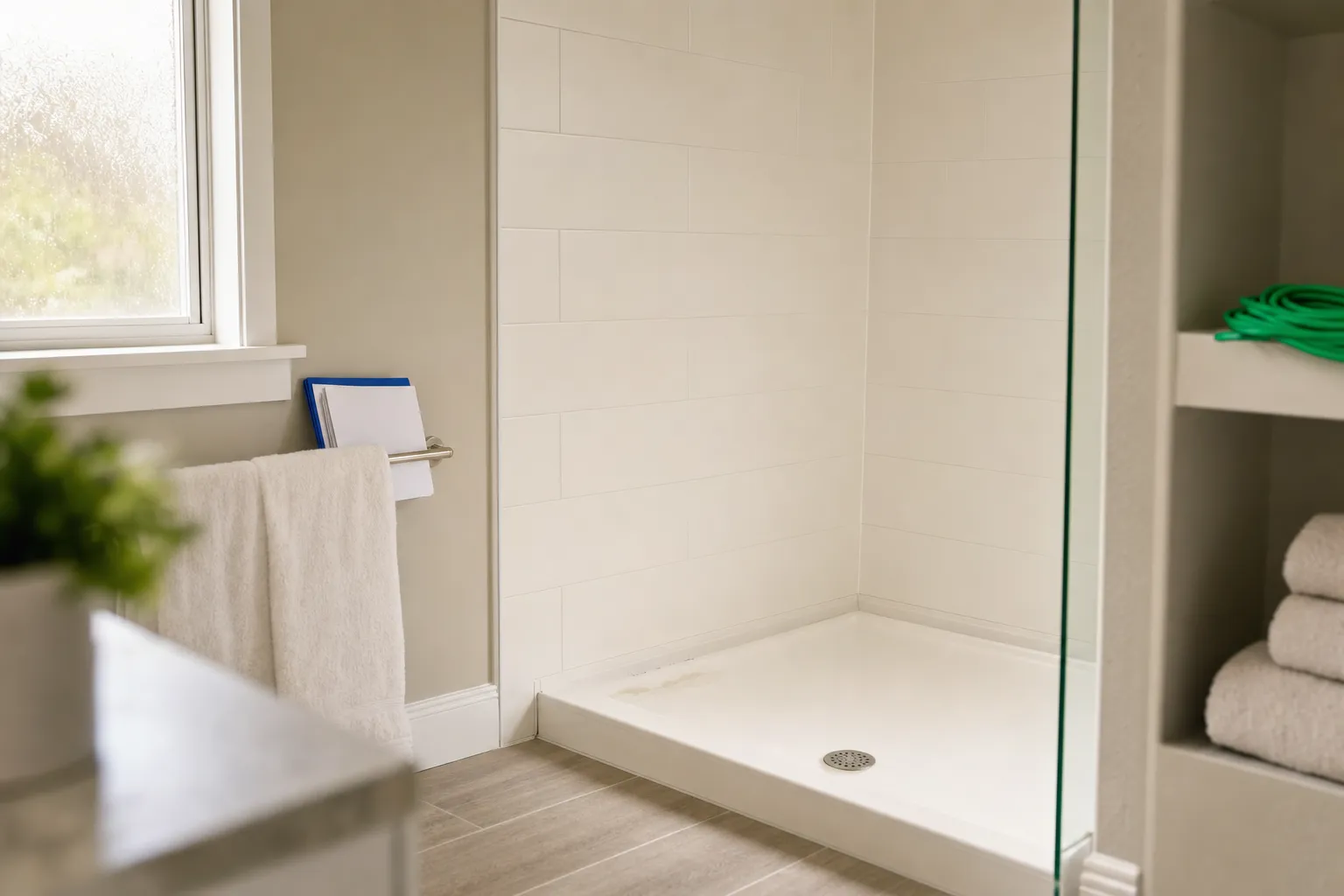
Roofing repair and flooring installation often intersect because water follows the easiest path, and a roof leak can show up as flooring damage many rooms away. We locate where moisture enters, stop the active leak, and then work out what roofing repairs and flooring restoration steps are needed to return the home to normal.
Why roofing repair and flooring installation overlap when diagnosing leaks
When we diagnose a leak, we think in terms of source, path, and finish. A roof problem is the source in many houses in the Air Force Academy area, but the visible damage may appear in ceilings, walls, or floors. That means roofing repair, flooring installation, and drywall repair are different parts of the same problem solving process.
That overlap matters because treating the visible flooring damage without finding and repairing the source leads to repeated failures. We describe what we check, why the order of work matters, and which warning signs mean you need a coordinated repair plan.
Common leak scenarios we see in Air Force Academy and Colorado Springs
Local weather, roof styles, and building details shape how leaks appear. These are typical situations we encounter:
- Storm related roof flashing failures that route water into attic spaces and then into hallways or bedrooms.
- Ice dam and winter freeze damage that allows water to track under shingles and drip into wall cavities or down to lower floors.
- Punctures around vents or skylights that let rainwater enter and migrate along framing to flooring below.
- Old or failed underlayment that allows slow leaks, which show up first as floor staining or cupping in hardwood or laminate floors.
How we diagnose a leak step by step
- Initial intake and history. We start by asking when you first noticed stains or dampness, whether the problem follows weather, and if any recent roof or plumbing work occurred.
- Visual inspection from the inside. We check ceilings, walls, baseboards, flooring, and vents for staining, soft spots, and mold growth. Flooring clues like buckling, staining, or a musty odor help us narrow the path.
- Attic and roof interior check. When accessible, we inspect attic insulation, sheathing, rafters, and vent penetrations for recent water marks, mold, or mold staining.
- Exterior roof review. We look at shingles, flashing, vents, chimneys, skylights, gutters, and valleys for missing components, corrosion, or poorly seated flashing.
- Moisture mapping and testing. We use a moisture meter to map where moisture reads high, which shows the migration path and whether the floor is still drying or remains saturated.
- Isolate probable source and confirm by testing. For complex cases we may run a controlled water test on suspect roof areas or use infrared scanning to find hidden wet insulation or framing.
- Plan repairs and sequencing. We define which roof repairs stop water entry, what flooring work is necessary after drying, and how drywall or trim repairs will follow. We coordinate trades so roofing repair precedes irreversible flooring installation.
When we inspect a home we document visible damage and recommended next steps. We also note timing constraints related to weather and materials availability.
Why order and coordination matter between roofing and flooring work
Roof repair must come first if the roof is the leak source. Installing a new floor over a still active leak wastes money and creates mold risk. Conversely, if the leak source is a plumbing line or appliance, repairing that first prevents reinstallation of new roofing or roofing details that do not address the real problem.
We act as the single point of contact when multiple trades are required. That reduces miscommunication, aligns timelines, and keeps the work site clean for lived in homes and rental turnovers.
Signs a flooring problem is caused by a roof leak rather than a plumbing leak
These clues help distinguish the two common sources:
- Damage patterns that appear after rain or storms suggest an exterior roof source.
- Water stains that start at outer walls, under skylights, or near roof penetrations point to roofing issues.
- Localized wet spots near plumbing fixtures that change with appliance use suggest a plumbing source.
- Moisture that tracks along ceiling joists toward exterior walls usually indicates water entering from above.
What good leak diagnosis looks like
Good diagnosis is evidence based, measurable, and conservative. We rely on visible clues, moisture meters, attic checks, and documented testing before removing finished flooring or ceiling finishes. That protects materials you want to save and prevents unnecessary demolition.
Leak diagnosis checklist
- Confirm whether water is active or historic with moisture readings.
- Inspect attic, roof penetrations, and exterior roof components.
- Map moisture migration from ceiling to floor.
- Photograph and document findings for insurance or rental records.
- Sequence repairs so water entry is stopped before finish work begins.
Watch out: Replacing flooring before confirming the leak source creates a high risk of repeat damage and mold. Do not assume a single stain means a single localized problem.
When flooring installation follows leak repair what we check first
Before installing new floors we confirm that the structure and subfloor are dry, square, and free of rot. That includes pulling small test sections if readings are borderline, replacing compromised subfloor, and installing appropriate moisture barriers for engineered wood, solid hardwood, laminate, or tile.
We also review manufacturer installation requirements for the flooring you choose to make sure warranty conditions are met. For more about materials and care we recommend reading our flooring materials topics at the site.
How we work with drywall repair and other finish trades
Roofing problems can damage drywall far from the roof line. After drying and structural repairs, drywall repair and texture matching are often required. We coordinate those trades so plaster work and paint occur only after moisture levels are safe for finishes.
That coordination minimizes touch ups and keeps timelines predictable for homeowners and rental managers managing turnovers in Colorado Springs and the Air Force Academy neighborhoods.
Common homeowner missteps and how to avoid them
- Replacing visible finishes too early. Wait until moisture levels are stable.
- Assuming gutters are unrelated. Clogged or misaligned gutters often redirect water to vulnerable roof edges.
- Using indoor heaters to force dry floors. That can trap moisture in subfloor layers and cause mold.
- Not documenting damage. Photos and moisture readings help with insurance and repair planning.
Maintenance and prevention tips
Routine care reduces the chance of hidden leaks and flooring damage:
- Inspect roof flashings and gutters twice a year, in spring and fall.
- Keep attic vents clear and insulation at appropriate levels to avoid ice dam formation in winter.
- Fix loose or missing shingles and seal around vents and skylights promptly.
- Watch for early flooring changes, like cupping or raised seams, and have them checked before they worsen.
Pro tip: After a storm, do a quick walk through inside your home. Look for new damp spots on ceilings and feel baseboards for soft spots. Early detection keeps repairs smaller.
Key takeaway
Roofing repair and flooring installation are often two parts of the same repair. We find the source, stop the water, and then restore finishes so the job lasts. Coordinated work between roofing, flooring, and drywall trades prevents repeat damage and conserves materials and budget.
Related topics and services
For more detail on locating leaks see our topic page on leak diagnosis. If the roof is involved we describe repair options on our Roofing Repair service page. When flooring replacement is part of the solution we handle Flooring Installation and coordinate drywall work through our Drywall Repair service page. Our service area and local projects are described on our locations page and our company overview is on the Home page.
Frequently asked questions
How quickly should I act when I find a water stain on the ceiling?
Act as soon as you notice a new stain. Start by documenting the stain with photos and note if it grows after rain. If the stain is active or growing, arrange an inspection because active leaks can cause structural damage and mold growth.
Can a roof leak cause hardwood floor cupping?
Yes. Prolonged moisture exposure from a roof leak can cause hardwood and engineered wood to cup, swell, or delaminate. The first step is to find and stop the water source, then assess the subfloor and flooring to determine repair or replacement needs.
Do you replace the subfloor after a leak?
We only replace subfloor that is soft, rotted, or has moisture readings above safe thresholds for the flooring manufacturer. Often small sections are repaired and reinforced. We document conditions with moisture meters before deciding on replacement.
What tests do you use to find a hidden leak?
We use visual attic checks, moisture meters, infrared scanning when useful, and controlled water testing on roof areas to confirm paths. The combination reduces unnecessary demolition and helps target repairs accurately.
Will insurance cover roof and flooring repairs after a storm?
Coverage varies by policy and the cause of damage. We document damage with photos and reports that you can use for an insurance claim. We also coordinate with insurance adjusters when requested to explain findings and proposed repairs.
How long after a roof repair can new flooring be installed?
New flooring can be installed after moisture readings on the subfloor and structural framing fall within manufacturer recommended limits. That timeline depends on the extent of saturation, ventilation, and drying methods used, and can range from a few days to several weeks.
Learn more and check our local reviews
Read customer reviews and get directions from our Google Business Profile to see recent projects in Colorado Springs and the Air Force Academy neighborhoods. Learn more about our services and related topics on the site.