
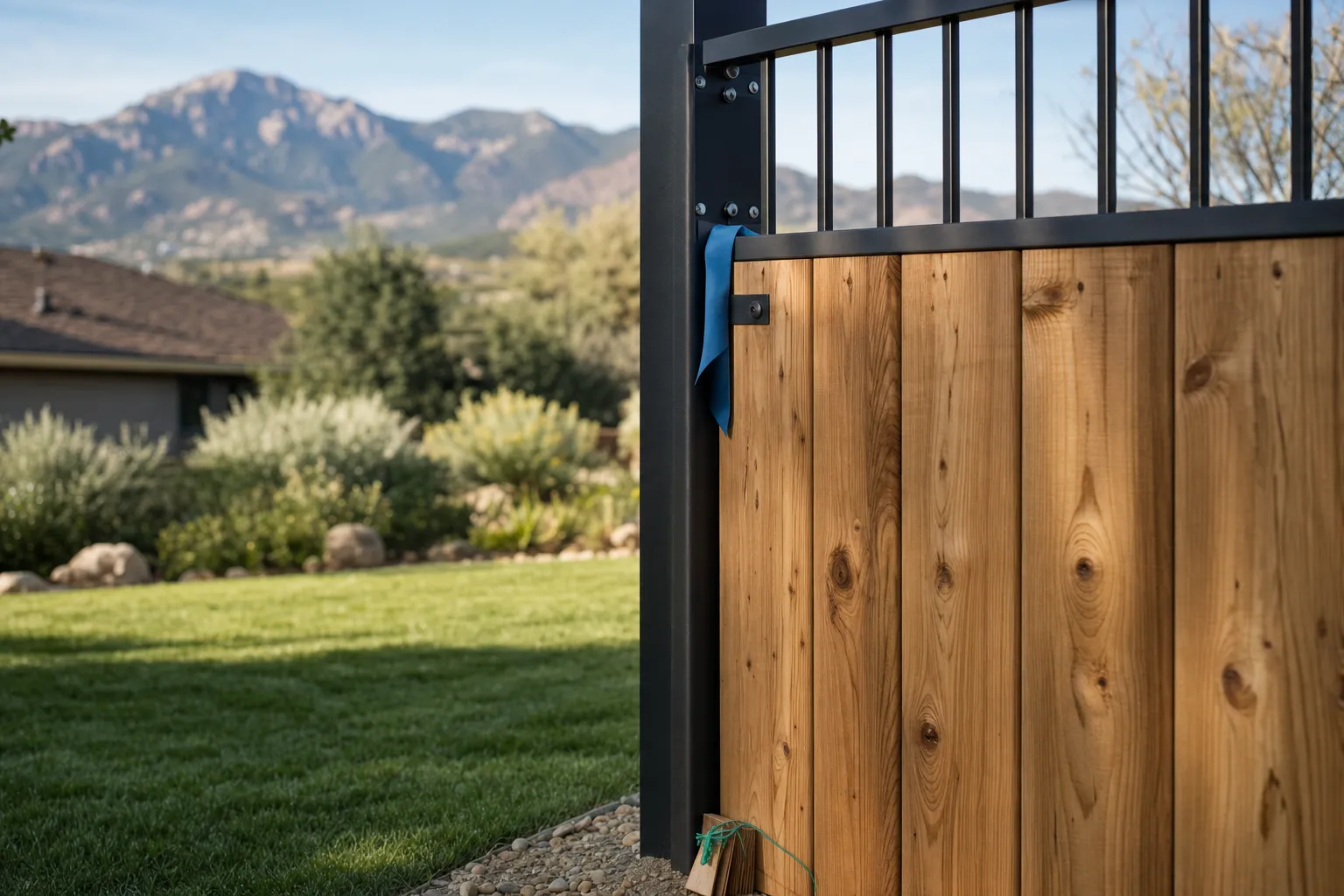
Before you start fence installation, ask about materials, local permit and code requirements, property lines, site and soil conditions for post footings, expected lifespan and maintenance, gate hardware and access, and who will handle site prep and cleanup. Those questions reveal the tradeoffs that determine cost, durability and the finished look.
What we mean by fence materials and why this topic matters
When we talk about fence materials we mean the primary components that define how a fence looks, how long it lasts and how much maintenance it needs. That includes the pickets or panels, the rails, posts and fasteners, and gate hardware. Material choice affects aesthetics, privacy, wind resistance, maintenance needs and how the fence performs in the Colorado Springs climate.
We focus on questions you should ask before work begins so you can compare realistic options and avoid costly changes during construction. We have been remodeling and repairing homes in Colorado Springs since 2000, and we bring that field experience to material selection and installation details.
Why these questions matter in Colorado Springs
Colorado Springs has wide temperature swings, strong sun exposure and periods of gusty wind. Those conditions influence how materials age, how fast finishes break down and which post footing methods resist frost heave. Local rules, homeowner association requirements and property boundaries also shape which options are practical.
Answering the right questions up front reduces surprises, keeps projects on schedule and helps the fence last longer with lower maintenance. We mention town and neighborhood specifics, and we link to local guidance on permits and regulations so you know where to look before you commit.
Key concepts to understand
- Material versus system. A fence is a system of posts, rails, panels and hardware. One material choice for pickets may force a different post or footing approach.
- Durability versus maintenance. Some materials weather with little care, others need periodic staining or sealing to keep them looking right.
- Structural versus cosmetic components. Posts and footings carry the load. Panels and pickets deliver privacy and style.
- Site and soil impact. Rocky soil, expansive clay and areas with frost can require deeper or different footings.
- Code and easement constraints. Setbacks, sight lines at driveways and utility easements can limit placement and height.
Questions to ask before a fence installation
We recommend a short checklist you can use when you speak with a contractor, builder or neighbor. These questions clarify responsibilities and expose hidden costs and tradeoffs.
Pre installation checklist
- Who owns the property line, and has a survey or a recent property corner confirmation been done?
- What local permits or approvals are required for fence height and location in Colorado Springs?
- Which materials do you recommend for this location, and why?
- What post footing method do you plan to use, and how does that handle frost heave and soil conditions?
- What gate hardware and latch type do you recommend, and how will it be secured?
- What is the expected lifespan and routine maintenance for each material option?
- Who is responsible for removing old fencing, grading turf, and cleanup?
- Will any nearby landscaping, irrigation, utilities or tree roots be affected?
- What is the timeline, including inspections if permits are required?
How to interpret answers about materials and installation
Not all recommendations are equal. Here is what to listen for when you compare proposals.
- Specifics about post depth and backfill. Good answers mention post depth relative to local frost depth and the type of backfill, such as compacted gravel for drainage. Vague answers mean you should ask for clarification.
- Fastener and connector types. Corrosion resistant hardware, like stainless steel or coated fasteners, matters in sunny, dry climates where metal finishes can fail.
- Warranty scope. Ask what is covered by a manufacturer warranty versus the installer warranty and how long each lasts.
- Maintenance frequency. If a contractor recommends wood, they should explain staining schedules and how to treat exposed end grain and cut posts.
Comparing common fence materials
Below we compare typical materials so you can weigh appearance, maintenance and cost considerations. We avoid numerical price claims because local labor and materials vary, but these pros and cons reflect field experience.
| Material | What it looks like | Durability and upkeep |
|---|---|---|
| Wood | Natural appearance, easy to customize with paint or stain | Needs regular staining or sealing, can rot or warp if not detailed properly, posts require good footings and flashing |
| Vinyl | Crisp, low maintenance look, available in panels or picket styles | Very low maintenance, can become brittle in extreme sun if low quality, color options limited |
| Metal or aluminum | Slim profiles, modern or traditional styles, open visibility | Low maintenance when powder coated, excellent for wind but not for complete privacy |
| Composite | Wood like look with less maintenance | Durable, resists rot and insects, color can fade over time, panels and posts need compatible connectors |
Site conditions and post footings
Post footings are the foundation of a fence. The wrong footing is the main cause of early failure. We inspect soil, grade, drainage and existing vegetation before we recommend a footing method.
- Soil evaluation. Rocky soil, compacted fill or loose sandy soil change how we place and brace posts.
- Frost and drainage. Posts must resist freeze and thaw cycles. Proper drainage and a footing that extends below frost depth reduce heaving.
- Root and utility awareness. We locate utilities and account for tree roots when planning post locations.
Watch out: Digging without utility locates can be dangerous. Confirm utility locations before post holes are dug.
Permits, codes and neighbors
Rules about fence height, location and sight lines vary by city, county and neighborhood association. In many parts of Colorado Springs, front yard fences have different height limits than rear yard fences, and corner lots may have sight line restrictions near driveways.
Ask your local permitting office or review neighborhood covenants before finalizing plans. We also recommend confirming property lines with a survey when there is any question about ownership. If you need guidance on permit logistics and common code questions, see our page on Permits and Codes.
Common questions from our Colorado Springs clients
These are questions we hear most often, and how we answer them from field experience.
- How long will this fence last? Lifespan depends on material and maintenance. Properly installed posts and good drainage are as important as material choice.
- Can we install the fence on a slope? Yes, but the approach varies. Stepped panels work in some situations, or a graded fence can follow the slope. We evaluate for water shedding and soil stability.
- Who handles old fence removal? Confirm removal and disposal in the scope. We coordinate demolition and hauling when needed as part of our fence installation work.
- What gate hardware works best? For heavy gates, look for heavy duty hinges and a secure latch type that resists sagging. A properly anchored gate post makes the biggest difference.
Related services we provide
Fence projects often touch other areas of home repair and remodeling. We handle several related services that homeowners commonly need during a fence project.
- Gate framing and small carpentry work.
- Site cleanup, hauling and disposal of old materials.
- Coordination with roofing repair or drywall repair when a fence project is part of a larger exterior remodel.
Learn more about our fence installation work on our Fence Installation service page. If your project also affects nearby roofs or siding, our Roofing Repair and Drywall Repair pages explain how we coordinate trades to keep timelines tight.
Where we work and local considerations
We serve homeowners, landlords and vacation rental owners in Colorado Springs and nearby neighborhoods. Local micro climates, lot sizes and HOA rules change how we approach fence design from one neighborhood to the next. For guidance specific to the area, see our Colorado Springs location page at Colorado Springs, Colorado.
Helpful resources and further reading
For background reading about material performance and installation considerations, we recommend consulting industry and academic sources when you need code or technical guidance. When you are ready to plan, pair their guidance with local permit information.
- Check manufacturer guidance for specific material maintenance and fastening recommendations.
- Colorado State University extension publications provide practical advice on wood weathering and landscape interactions.
- Industry trade organizations outline common standards for fence components and recommended testing protocols.
Pro tip: Ask for references and recent photos of completed fences in similar neighborhoods. That gives you a realistic view of finish quality and longevity in local conditions.
How we approach a fence project
We start with a site visit to confirm property lines, check for utilities and evaluate soil and drainage. Then we discuss material options and an installation approach that balances performance and maintenance with your aesthetic goals. We document permit needs and coordinate inspections where required.
Because we are a local remodeler working in lived in homes and rental turnovers, we focus on clear timelines, respectful cleanup and communication about any findings that change scope. We are licensed and insured and have been working in Colorado Springs since 2000.
Pros and cons at a glance
Pros
- Choosing the right material and footing extends life and reduces maintenance.
- Properly anchored gates reduce long term repairs.
- Local experience avoids permit and easement surprises.
Cons
- Upfront cost varies widely by material and site conditions.
- Poorly chosen footings can cause premature failure.
- HOA or neighbor disputes over setbacks can delay projects.
Frequently asked questions
Do I need a survey before we install a fence?
When property lines are clear, a survey is not always required. However, if there is any doubt about boundary lines or if you plan to place posts near a lot line, we recommend confirming corners with a surveyor. That step prevents disputes and keeps the project moving smoothly.
How deep should fence posts be set in Colorado Springs?
Post depth depends on frost depth and soil. A contractor should reference local frost information and explain the planned depth and backfill method. We evaluate site specific conditions and recommend a footing that resists frost heave and provides long term stability.
Which material needs the least maintenance?
Vinyl and powder coated aluminum generally need the least routine maintenance. Composite materials resist rot and insects. Wood requires periodic staining or sealing to preserve appearance and resist moisture damage.
Will a fence need a permit?
Permit requirements depend on fence height, location and local code. Front yard and corner lot rules are commonly different. Check local permit guidance and include permit planning in your project timeline.
Key takeaway
Ask focused questions about materials, post footings, permits, property lines, gate hardware and maintenance before you start fence installation. Those answers reveal the tradeoffs that determine cost, durability and the long term performance of your fence in Colorado Springs.
Learn more and read customer feedback
Read our service details and related topics to plan your project, and check Homestead Improvements' Google Business Profile for reviews and directions. For planning resources, see our Fence Installation service page and our Post Footings topic page.