
Yes. We always review moisture barriers before starting any flooring installation because moisture control determines what materials will work, how the subfloor needs to be prepared, and whether a flooring manufacturer will honor the warranty.
What is a moisture barrier and how it affects flooring
A moisture barrier is any material or layer that limits water vapor or liquid water from moving between the ground, a concrete slab or the subfloor and the finished floor. Common forms include polyethylene sheets beneath slab concrete, sheet membranes, liquid-applied membranes, and factory applied underlayments on engineered flooring.
Why it matters: Excess moisture causes adhesive failures, cupping, swelling, mold behind finishes and delamination in vinyl, engineered hardwood and tile assemblies. Choosing the right barrier and verifying its condition are core parts of a successful installation.
Why we review moisture barriers before installation in Colorado Springs
Colorado Springs has a wide range of building ages, foundation types and seasonal moisture patterns. Before we install any flooring, we check existing moisture control so the finished surface performs for years.
- Protects finishes and adhesives from moisture related failure
- Determines the correct floor covering and underlayment system
- Helps preserve manufacturer warranties by meeting moisture limits
- Identifies hidden water intrusion or roof and site drainage issues before finishes are installed
Homes near older neighborhoods or with concrete slabs poured without modern vapor control often need additional measures. We document findings so property managers and homeowners know the options.
Key concepts every homeowner should understand
Types of moisture control layers
- Vapor barrier: Low permeability materials such as 6 mil polyethylene used under slabs to stop water vapor from migrating up through concrete.
- Vapor retarder: Materials or coatings that slow vapor movement but do not stop it entirely. Used in some subfloor and tile assemblies.
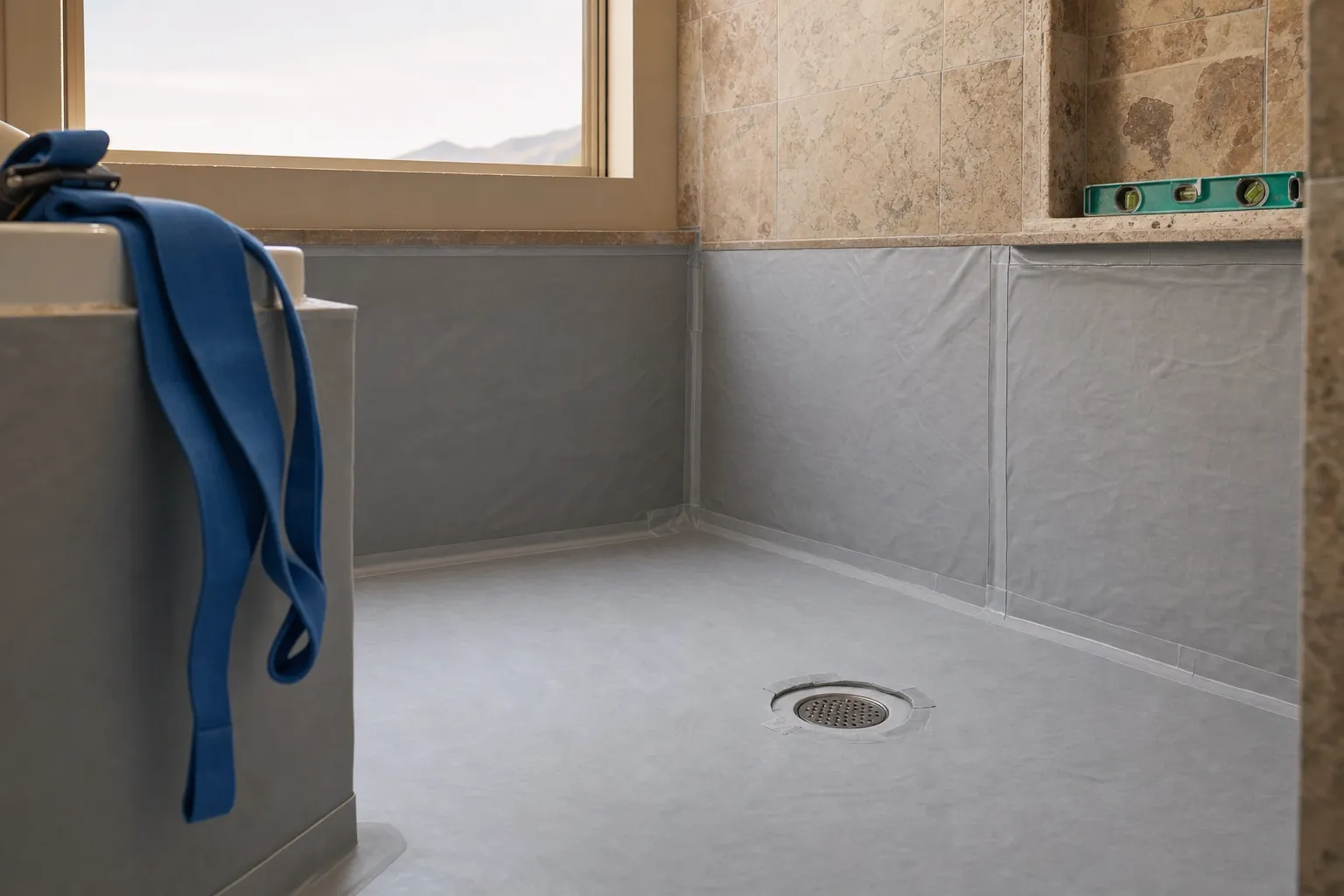
- Sheet membranes and liquid membranes: Installed on subfloors or slabs to provide a continuous water resistant layer under tile or stone.
- Underlayments with factory applied barriers: Engineered underlay products that combine cushioning, leveling and vapor control for floating floors.
Moisture sources to consider
- Groundwater and slab water migration
- Plumbing leaks and past water damage
- Condensation from HVAC imbalance and seasonal humidity swings
- Roof leaks or poorly routed downspouts that soak foundations
How we evaluate moisture without doing the work for you
We follow a practical review process so you know the condition and the options. These are high level steps that require trained assessment and, in some cases, lab tests or manufacturer protocols.
- Record the building background. Age, foundation type, past water events and recent repairs tell us where moisture risk is highest.
- Visual and tactile inspection. We look for efflorescence, staining, soft subfloor areas and mismatched finish patterns that suggest moisture movement.
- Measure moisture levels. We use industry tools to measure slab moisture and wood moisture content, and interpret those numbers against manufacturer limits.
- Check existing membranes. We verify whether a polyethylene slab sheet, liquid membrane or underlayment is present and whether it appears intact.
- Recommend mitigation or next steps. If levels are above acceptable limits we outline options such as installing a compatible vapor retarder, selecting a moisture tolerant finish, or addressing site drainage.
Pro tip: Manufacturer moisture limits vary. A reading that is acceptable for one vinyl product may be too high for engineered hardwood. We cross check readings with product requirements before recommending materials.
Checklist for a pre-install moisture review
Pre-install review checklist
- Confirm foundation type and slab history
- Document known leaks, roof repairs or plumbing incidents
- Measure slab relative humidity or calcium chloride values when required
- Measure wood subfloor moisture content in multiple locations
- Inspect for existing polyethylene or membrane continuity
- Assess HVAC and ventilation conditions during seasonal extremes
- Compare measures with the chosen flooring manufacturer's moisture limits
- Recommend corrective options or compatible products
Common questions homeowners ask
Below we list the questions we hear most often and the practical answers we give, based on local conditions and our experience since 2000.
- Can I install hardwood over a concrete slab? Sometimes. We check slab moisture levels and the presence of a vapor control layer. If levels are within the manufacturer limits and a proper underlayment is used, engineered hardwood is more likely to be successful than solid hardwood.
- Will a moisture barrier stop all water problems? No. A barrier limits vapor and helps prevent migration from the slab, but it does not fix poor site drainage, leaking plumbing or roof runoff that soaks the foundation. Those issues need to be resolved to protect the barrier and the floor finish.
- Do I need special membranes for tile? In many installations we recommend a bonded membrane over the slab or substrate for tile and natural stone, especially where moisture is known or expected.
- How does roofing repair relate to moisture in floors? Roof leaks can travel and cause localized elevated moisture that shows up in ceilings and subfloors. When we diagnose moisture issues we sometimes coordinate with roofing repair to address the source.
Related services we coordinate
Moisture control is often a cross trade issue. We work with several related services depending on findings.
- Flooring Installation, where the moisture review shapes the installation method and product selection
- Tile Installation, which may require membranes or mortar systems compatible with the moisture profile
- Roofing Repair, when external leaks are contributing to interior moisture
Related locations and local considerations
Our work is focused in Colorado Springs and nearby neighborhoods. Local soil, seasonal humidity swings and older foundations change the way we approach moisture control.
- Old slabs in central Colorado Springs often lack modern polyethylene sheets under the concrete
- Higher elevation temperature swings can cause condensation cycles in basements and slab perimeters
- Areas with clay soils need careful grading so water moves away from the foundation
- For specific neighborhood considerations see our Colorado Springs location page and local pages for nearby communities
Learn more about local substrate selection and treatments on our topics page about Waterproof Substrates.
Helpful resources and standards
When we quote moisture numbers or reference product requirements we rely on manufacturer technical documents and industry guidance. For homeowners who want the original sources we commonly consult:
- Manufacturer installation manuals for the specific flooring product being considered
- Guidance from university extension or building science programs on slab moisture behavior
- Local building code references for vapor control in new construction
We avoid generic online advice and instead reference product specifications and established testing methods when making recommendations.
When a moisture review points to further action
Not every elevated reading needs the same fix. Typical outcomes from a review include:
- Proceed with the chosen flooring using a compatible underlayment or adhesive
- Install a vapor retarder or membrane over the slab before finishing
- Choose an alternate flooring type that tolerates higher moisture, such as certain luxury vinyl products
- Address the moisture source first, such as roof or plumbing repairs, then revisit the installation
We do not publish detailed how to steps for installing or patching barriers, because the work requires trained crews, proper materials and, in many cases, coordination with other trades.
How we document findings and next steps
Good documentation protects you and the installation. When we perform a review we provide a written summary that includes measured values, locations of measurements, observed conditions, and recommended next steps. That documentation is useful for product warranty claims and for property managers who need a clear record.
We have over two decades of experience working in lived in homes and rental turnovers across Colorado Springs. Clear documentation and measuring before we start saves time and prevents unexpected failures.
Pros and cons of common moisture control options
Pros
- Sheet barriers under slabs are low cost and effective when installed with good joint detailing
- Bonded membranes create a continuous layer under tile that resists moisture at the surface
- Factory applied underlayments simplify floating floor installations and add consistent performance
Cons
- Retrofit barriers can be disruptive if they require removal of finishes
- Some barriers trap moisture if the underlying cause is not corrected
- Incorrect product choice can void flooring manufacturer warranties
Comparison: common moisture control choices for basements and slab on grade
| Option | When it is appropriate | Main limitation |
|---|---|---|
| Under slab polyethylene sheet | New concrete slabs and new construction | Not usable as a retrofit without major work |
| Bonded liquid membrane | Tile installations and repairs over existing slabs | Requires correct surface prep and skilled application |
| Factory underlayment with vapor layer | Floating vinyl and engineered floors over slabs | Performance tied to product limits and substrate prep |
Frequently asked questions
How do you test slab moisture?
We use industry accepted meters and, when needed, in situ relative humidity testing or calcium chloride tests specified by the flooring manufacturer. We interpret results against the product limits to determine suitability.
Can a moisture problem be fixed without replacing the slab?
Often yes. Options include installing bonded membranes, applying surface treatments, improving site drainage, or choosing alternative flooring systems. The right solution depends on the measured condition and the underlying cause.
Will a moisture barrier fix a past leak?
A barrier may prevent future upward vapor movement, but it will not repair damage from past leaks or remove trapped moisture. We recommend confirming the source and ensuring repairs are complete before covering surfaces.
What does a flooring manufacturer require for moisture control?
Requirements vary. Manufacturers publish installation instructions and maximum moisture limits. We compare measured values to those limits before recommending products or installation methods.
Do you handle the whole project if repairs are needed?
Yes. Homestead Improvements coordinates trades when we find related needs such as roofing repair, drywall repair or subfloor replacement. We manage the sequence so the moisture issue and the finish installation are both resolved correctly.
Key takeaway
Reviewing moisture barriers before flooring installation is essential. It protects your finish, informs the right material choices and prevents costly callbacks. We document conditions and recommend fixes that match manufacturer requirements and local building realities in Colorado Springs.
Learn more and check our local information
Read our related articles on substrate and material choices and view services we commonly coordinate to resolve moisture concerns. For neighborhood specific guidance see our Colorado Springs location page and our resources on waterproof substrates.