
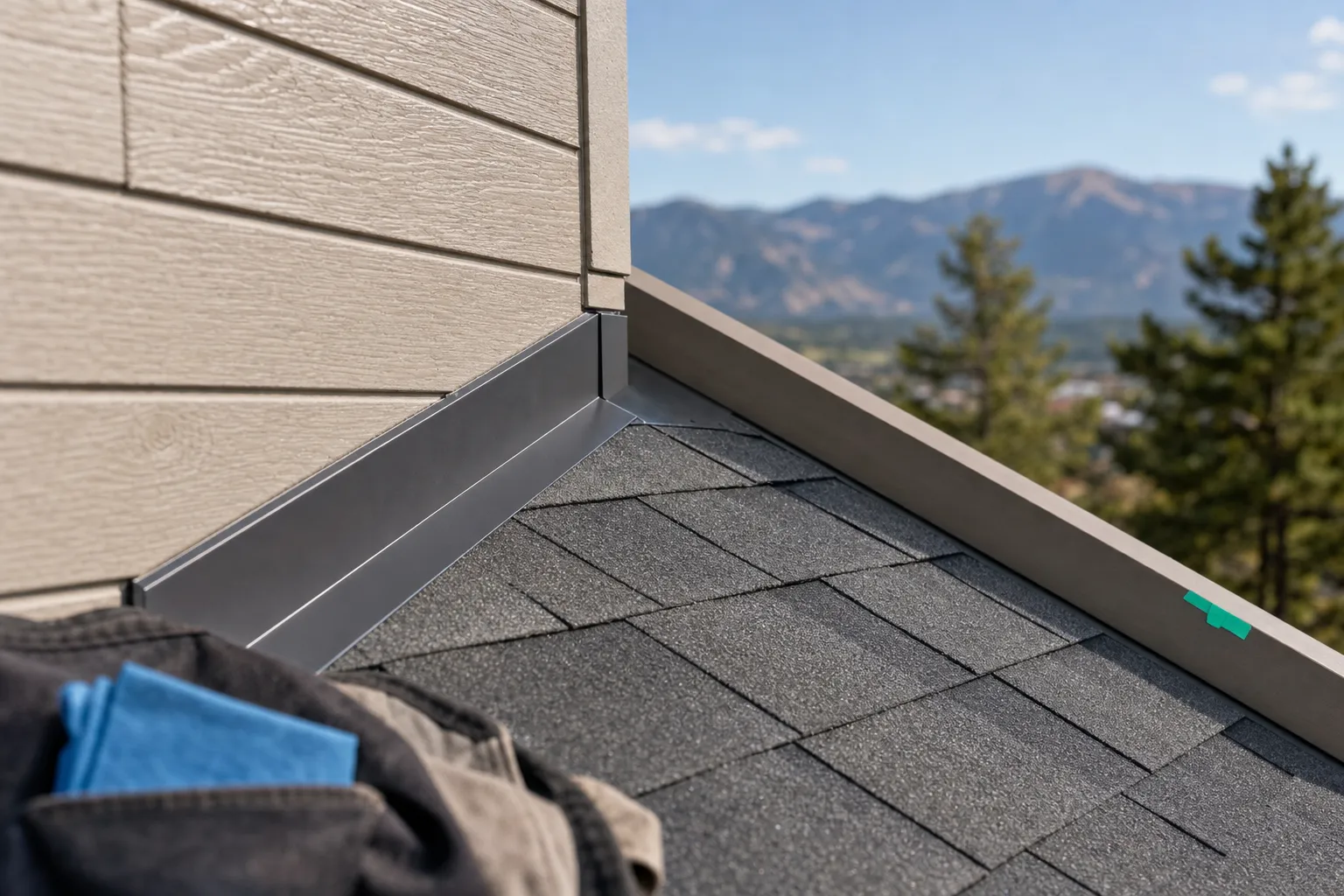
Flashing is the thin metal or membrane we install where the roof meets a wall, chimney, skylight, or valley to keep water out. In Elsmere Colorado, properly installed flashing that ties into underlayment and siding is the single most important detail for preventing leaks at those vulnerable spots.
What flashing is and how it works
Flashing is a water shedding detail made from metal, rubberized membrane, or manufactured boots. Its job is simple, but critical. Flashing creates a continuous path that channels rain and melting snow away from joints and penetrations, so water cannot get behind cladding or into the roof deck.
Common flashing locations
- Eaves and rake edges
- Wall to roof intersections, where step flashing is typical
- Chimneys and masonry, where counter flashing overlaps base flashing
- Roof valleys, where continuous valley flashing or woven shingles are used
- Plumbing vents, skylights, and HVAC penetrations
Why proper flashing matters in Elsmere Colorado
Elsmere sits in the Colorado Springs area and faces seasonal snow, freeze thaw cycles, and occasional high winds. Those conditions expose flashing details to movement, corrosion, and ice dam pressure. When flashing fails, leaks often start hidden behind siding or under shingles, which leads to rot, mold, and drywall damage.
We inspect flashing as a standard step during roof work and leak investigations. A sound flashing detail reduces the chance of repeat leaks after a roof repair.
Key concepts and terminology
- Step flashing. Small L shaped pieces installed in sequence where a roof meets a vertical wall.
- Counter flashing. The upper piece, typically set into a joint or masonry, that covers base flashing for chimneys and wall flashings.
- Water and ice eave protection. Self adhered membranes at eaves and valleys that back up flashing against ice dams.
- Through wall flashing. Flashing that carries water out of a wall assembly at a weep point.
- Kickout flashing. A small flashing that guides water away from the wall and into the gutter at the end of a roof-wall intersection.
Common flashing materials and when we use them
| Material | Typical use | What to watch for |
|---|---|---|
| Galvanized or nonferrous metals, such as aluminum | Eaves, step flashing, kickouts | Corrosion over time, paint wear, incompatible fasteners |
| Copper | High end chimneys and decorative work | Long lasting but more costly, requires compatible metals nearby |
| Self adhered membrane | Ice and water protection at eaves, valleys, and penetrations | Must be lapped correctly and sealed to shingles and underlayment |
| EPDM or rubber boots | Plumbing vent flashings | Rubber can crack with UV exposure, sealant may age |
How flashing fails, and what we look for
Flashing usually fails for three reasons: improper installation, movement or settlement, and material degradation. When we do a roof inspection or a leak diagnosis, we check these specific signs.
- Open laps or missing step pieces at walls
- Broken kickout flashing that dumps water behind siding
- Rusted metal flashing or fasteners that have backed out
- Counter flashing not embedded into mortar or sealed at chimneys
- Improperly lapped membrane at valleys and eaves
Decision checklist for repair versus replacement
When repair is reasonable
- Localized flashing separation or a single failing penetration
- Roof covering otherwise in good condition with sufficient remaining life
- No widespread rot or water damage to decking or framing
When replacement or larger work is needed
- Multiple flashing locations showing corrosion or seizure
- Evidence of long term water entry and rot around the roof deck or wall sheathing
- Roof covering nearing the end of its expected life and flashing details are old or nonstandard
How we inspect flashing during roofing repair and leak diagnosis
We start with a visual roof and gutter inspection, then examine suspect areas from clean vantage points. If a leak is active, we follow the water path and remove just enough material to see the flashing interface. We document the condition and recommend the smallest scope that reduces future risk while respecting your budget and timeline.
When work goes beyond basic repair, we coordinate any specialty trades and materials so flashing, underlayment, and shingles perform together. See our roofing repair service page for how we manage those projects.
Local code and manufacturer expectations
Flashing must be installed to both manufacturer instructions and local code details. Manufacturer guidance tells us head laps, fastener types, and substrate preparation. The building code addresses durable attachment and weather resistance. For a background definition of flashing and common industry terms, Wikipedia provides a useful overview.
When we reference manufacturer or code guidance for a specific project, we follow the written instructions for the materials we are installing and the local permit requirements that apply to Elsmere. For technical reading see GAF manufacturer information on flashing details and the International Code Council guidance on flashing.
Flashing definition and background, Wikipedia
Flashing information from a major manufacturer
International Code Council, code guidance
Related services and topics we cover
Flashing issues often appear alongside other repair needs. We link the work where it helps the final outcome.
- Leak diagnosis and tracing to find the source of water entry, which we cover in more detail on our leak diagnosis page.
- Drywall repair where interior damage occurred from a leak.
- Full roof replacement when flashing and roof covering are both aged.
How Elsmere location factors into flashing choices
Material selection and detailing change with climate and nearby exposure. In Elsmere, we consider snow load, sun exposure on south facing walls, and wind driven rain at exposed rakes and valleys. Those local conditions influence whether we specify thicker metal, a heavier self adhered membrane, or additional kickout protection for wall terminations.
We work across the Colorado Springs area and maintain local knowledge about permit practices and common construction types in neighborhoods like Elsmere. For location specific information see our Elsmere location page.
Pro tip: A small, visible stain on an interior ceiling does not always mark the flashing failure directly above it. Water can travel several feet along underlayment or framing before dripping. A professional diagnosis saves time and avoids needless removal of good materials.
Quality markers we use for flashing work
- Continuous lapping and sealed transitions, not cobbled or overlapped patches
- Use of compatible metals and corrosion resistant fasteners
- Integration with ice and water protection at eaves and valleys
- Kickout flashing terminating into the gutter or downspout runout
- Clear documentation of what was removed and what was rebuilt
Cost and scope considerations
Flashing repair can range from a small localized patch to a broader reflash that requires shingle removal and repair of underlying sheathing. We recommend matching the scope to the condition found and the expected remaining life of the roof covering. When a roof is near the end of its life, tying new flashing into a replacement roof is usually the most durable choice.
Key takeaway
Proper flashing details are essential to stop water where roofs meet walls, chimneys, and penetrations. In Elsmere Colorado, local weather and building patterns make correct materials and installation especially important. We make flashing inspection a routine part of any roof or leak work to reduce repeat problems and protect the home.
Frequently asked questions
How long does flashing last before it needs attention?
Life expectancy depends on material and exposure. Metal flashing can last decades, but fasteners, adjacent shingles, or mortar joints can fail sooner. We inspect flashing during routine roof checks and when a leak is reported.
Can I replace just the flashing or do I need a new roof?
Sometimes a local reflash is sufficient. If shingles are aged, underlayment is failing, or there is rot, replacing the roof and tying in new flashing gives a longer term result. We describe both options when we report our findings.
What is kickout flashing and why does it matter?
Kickout flashing directs water from a roof into the gutter at the point where a roof meets a wall. Without it, water can run down behind the siding and enter the wall assembly.
Do flashing repairs require a permit in Elsmere?
Permit requirements vary by the work scope and the local building department. Small repairs may not require a permit, but replacement work often does. We follow local permit rules and can point you to the right resources.
Learn more and check our local profile
If you want to read other resources on leak tracing or permit details, see our related topics and service pages. You can also view our Google Business Profile to read customer reviews and get directions for our Colorado Springs office.