
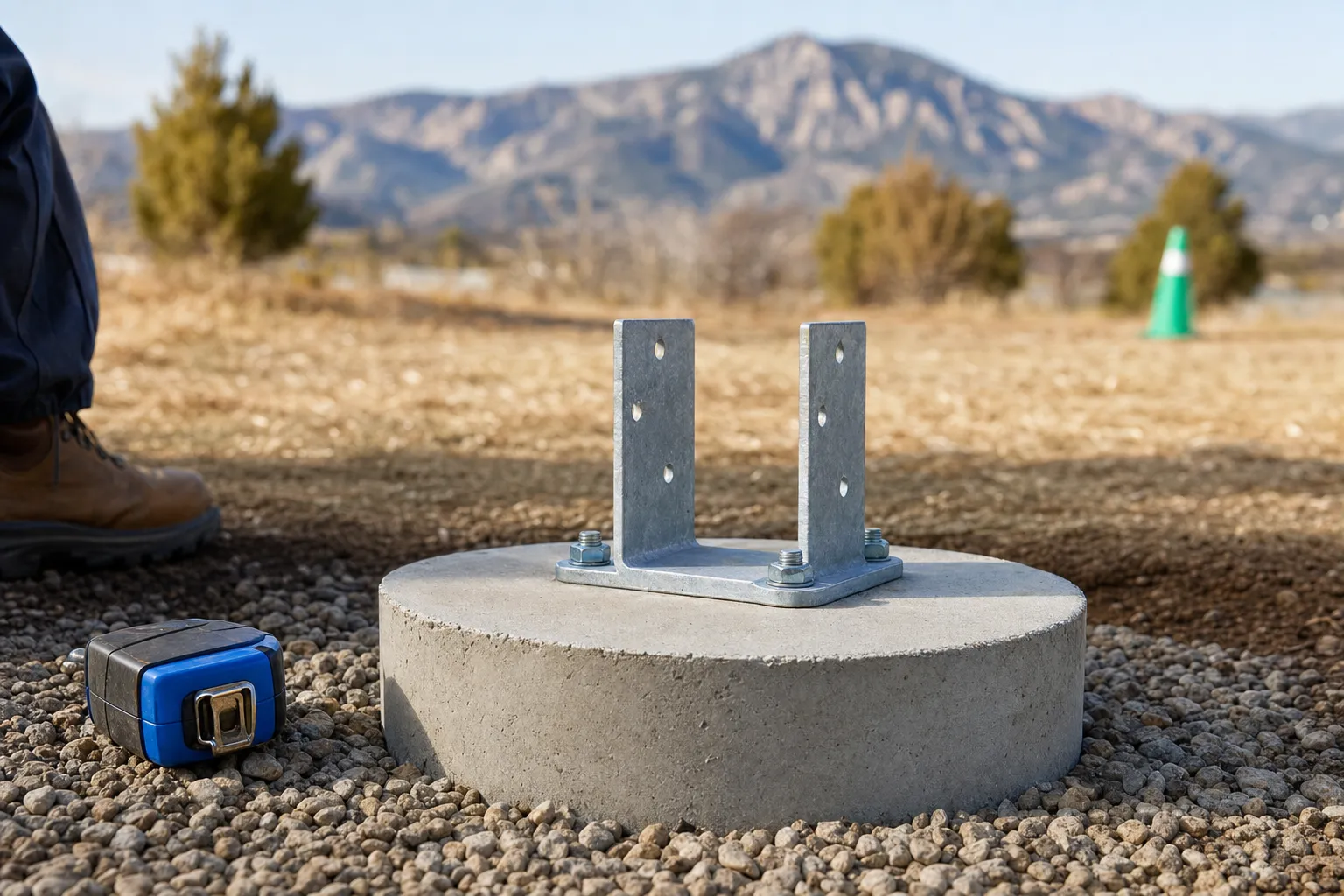
Post footings are the concrete bases we set under fence posts to keep them stable, aligned and resistant to frost heave. In Air Force Academy, Colorado, proper footings mean placing the base below the local frost line, adding drainage and following your building department rules so the fence lasts and stays plumb.
Why post footings matter
Footings do three jobs. They spread the load from a post into the soil, keep the post from settling or tilting over time, and reduce movement caused by freeze and thaw cycles. Without a sound footing, a fence will lean, gates will bind and boards will gap.
We set footings to handle local conditions common around the Air Force Academy, including clay pockets, shallow topsoil and seasonal freeze. That is why we evaluate soil, slope and drainage before we place any concrete.
Local rules and inspections
Many installations require permits and inspections. Building departments set minimum footing depth and permit requirements to protect structures from frost heave and poor soils. Check the El Paso County building division for permit rules and filing instructions before you start a project.
We also check utility lines, easements and neighborhood setback rules. Locating underground utilities is a safety step every time you dig. We coordinate permitting and inspections for clients in the Air Force Academy area to reduce surprises during construction.
Common footing types and when we use them
There are several practical ways to support a fence post. We choose the method based on post size, fence type, soil and site constraints.
- Cast in place concrete piers. We dig a hole, add gravel for drainage, then set the post into concrete. This is the most common approach for wood posts and heavy gates.
- Precast concrete tubes or sleeves. Where speed or weather matters, sleeves save time and reduce concrete handling. We still set them to the proper depth and backfill for drainage.
- Concrete with metal post anchors. For some metal or ornamental fences we set anchors in concrete and bolt the post to the anchor. This keeps the wood or metal off the ground and simplifies future replacement.
How soil and frost affect footing decisions
Two things drive the footing design in Colorado Springs and the Air Force Academy area: the frost line and the soil type. Frost heave can lift shallow footings, so posts must sit below the movement zone. Poor or loose soils need a wider or deeper footing to distribute loads.
Colorado State University Extension explains frost heave mechanisms and why proper drainage and depth matter. We use that same reasoning when choosing footing diameter and backfill.
What good footings look like for common fences
Expect these quality markers on a well built fence:
- Vertical posts that are plumb and aligned on a consistent line.
- Concrete that fully surrounds the post below grade where the post meets the footing, and clean gravel at the base for drainage.
- Footing diameter and depth sized for post and gate loads, with consideration for soil conditions.
- Neat backfill and compaction around the hole so the post does not settle unevenly.
We size footings so a 4 inch by 4 inch post and a heavier 6 inch by 6 inch post each have adequate support. Posts carrying gates or high wind loads receive a larger footing and sometimes reinforced concrete.
Practical steps we follow when installing post footings
- Site review and layout. We walk the line with you, confirm property lines and plan gate locations. We note slopes and drainage that will affect footing placement.
- Locate utilities and get permits. Before any digging we mark underground utilities and confirm permit needs with El Paso County or the local jurisdiction.
- Excavate and prepare base. Each hole is excavated to the required depth and diameter. We place a few inches of compacted gravel to promote drainage and prevent bottom heave.
- Set the post and pour concrete. We brace the post plumb, pour concrete to grade, and slope the top so water sheds away from the post. For metal anchors we set the anchor and later bolt the post to it.
- Cure, backfill and final alignment. Concrete needs time to reach strength. After it cures we backfill, check alignment and install fence panels or rails.
Watch out: Never assume a shallow hole is fine in our climate. Frost heave, poor drainage or utility conflicts can mean extra excavation or a different footing type. If excavation hits rock or unstable fill, the footing plan often changes on site.
When you can dig yourself and when to hire a professional
Homeowners can handle simple yard fences on flat sites with good soil if they are comfortable digging, setting posts and mixing concrete. But hire professional help when any of these apply:
- Gate posts or long runs that bear heavy loads.
- Sloped sites or steep grade changes.
- Known drainage problems or high water table.
- Complex property lines, easements or HOA rules.
- When permits and inspections add complexity.
As a remodeling and repair contractor serving Colorado Springs since 2000, we handle the full process for property owners who prefer a coordinated solution. We are licensed and insured and work with local inspectors for code compliance.
Questions to ask before starting fence footings
Prebuild checklist
- Has the building department set a minimum footing depth in your area?
- Are there underground utilities or irrigation lines along the proposed fence line?
- Will gates need reinforced posts or larger footings?
- Is the soil compact and well drained, or likely to hold water?
- Do property lines and easements allow the fence where you plan it?
Pro tip: If you are planning a fence in Air Force Academy, flagging the route and arranging a utility locate before you sign off on plans saves time. A marked route also helps when applying for permits or HOA approvals.
How we coordinate footings with other services
Post footings often touch other trades. For example, when a fence follows a home remodel schedule we coordinate with roofing or drywall teams to minimize site conflict. We also link footing work to related topics like fence materials and maintenance so the final result performs as intended.
Learn more about fence material choices on our page about Fence Materials, and see our Fence Installation service page for an overview of how we handle complete jobs in the area.
We regularly work in the local community and list the Air Force Academy as a service area on our location page for project references and directions: Air Force Academy, Colorado.
Timeline and what to expect on site
Footing work for a typical residential fence line usually takes one to two days for excavation and concrete placement, then a curing period before panels or rails are attached. Expect longer schedules when soil conditions are poor, when permits delay start dates, or when weather limits concrete work.
During the job we maintain a tidy site and protect landscaping where possible. If the job requires additional trades, we coordinate schedules to avoid repeated site disruptions.
Key takeaway
Post footings are the critical foundation of any durable fence. For installations in the Air Force Academy area we set footings to control frost movement, provide drainage and meet local permit rules so the fence stays square and gates work properly. If site conditions are unusual or permits are required, using an experienced remodeler reduces surprises.
Frequently asked questions
How deep do footings need to be in Colorado Springs and the Air Force Academy area?
Footing depth depends on the local frost line, soil type and your local building department rules. Depth is not a one size fits all measurement, so check permit requirements with El Paso County before you dig. We factor these requirements into every project plan.
Can we set a fence post in gravel or compacted soil instead of concrete?
Some temporary or light duty fences use compacted gravel or mechanical anchors, but for long term wood posts and gates we recommend concrete footings with a compacted gravel base for drainage. The choice depends on load, soil and longevity goals.
Do I need a permit to install fence footings?
Often yes. Permit requirements vary by jurisdiction and by fence height. We review permit needs for projects in the Air Force Academy area and coordinate inspections when required to help the job pass code checks.
What causes posts to lean after installation?
Posts lean when footings are too shallow, backfill is poorly compacted, or soil settles. Frost heave can also tilt posts if the footing is inside the active freeze zone. Proper depth, good drainage and correct compaction reduce those risks.
When should I call a professional instead of doing it myself?
Call a professional if your fence line includes heavy gates, slopes, unusual soils, underground utilities, or when permits and inspections add complexity. A contractor with local experience helps navigate those issues and coordinate inspections.
Learn more and check local details
For permit instructions and filing in El Paso County, consult the county building division and for frost heave guidance see Colorado State University Extension materials on the topic. Read customer reviews and get directions by viewing our Google Business Profile, and explore related pages about fence materials and fence installation on our site to learn more.