
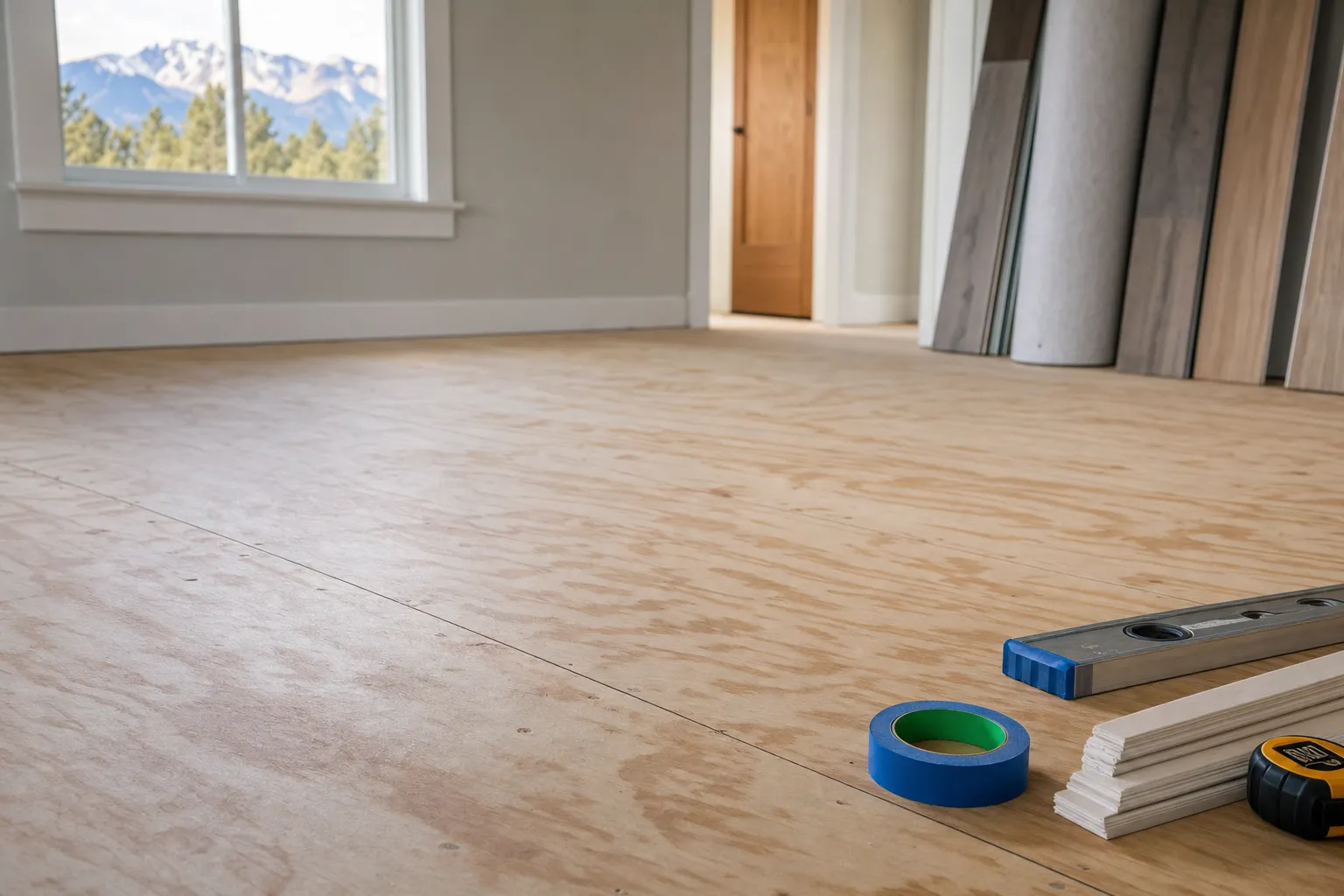
Proper subfloor preparation prevents premature flooring failure, reduces squeaks, controls moisture, and makes the finished floor look and perform as intended. At Homestead Improvements we start every flooring job in Cimarron Hills by testing and repairing the subfloor before the new surface goes down.
What is subfloor preparation
Subfloor preparation is the set of checks and corrective actions done to the structural surface under your finished floor. It includes confirming flatness and level, repairing or replacing damaged or soft sections, controlling moisture, fastening or blocking loose boards, and installing the right underlayment where needed. The subfloor may be plywood, oriented strand board, concrete, or existing hardwood, and each material needs a different preparation checklist.
When we talk about subfloor preparation in Cimarron Hills, we mean the work that happens after demolition and before the installer starts laying tile, hardwood, luxury vinyl plank, or engineered flooring.
Why subfloor preparation matters in Cimarron Hills
Local climate, elevation and housing stock change the risks for flooring projects. Cimarron Hills homes in the Colorado Springs area see large temperature swings and seasonal humidity changes that affect materials and adhesives. A floor that looks fine the day it is installed can develop gaps, buckling or squeaks if the subfloor was not prepared for local conditions.
We have been remodeling and repairing homes in Colorado Springs since 2000. Our experience shows the same avoidable problems keep recurring when subfloors are not checked for moisture, proper fastening, and flatness. Addressing these issues up front saves time and prevents callbacks down the line.
Key concepts to understand
- Flatness and level. Finished floors need a flat, uniformly supported base. Most manufacturers specify maximum deviation tolerances over a measured length.
- Structural soundness. The subfloor must be solid, free of rot, delamination or soft spots that allow movement.
- Moisture control. Moisture from concrete slabs, crawlspaces or plumbing leaks causes adhesives to fail and wood to warp.
- Deflection limits. Joist spacing and framing affect how much the floor will bend under load. Some floor types cannot tolerate high deflection.
- Underlayment compatibility. The right underlayment for tile, vinyl or hardwood affects adhesion, cushioning and vapor control.
How we assess a subfloor
We describe the assessment below so you know what to expect. We do not publish DIY instructions for structural repairs, but this checklist explains the decisions we make.
- Visual inspection. We look for stains, rot, patches, gaps, and evidence of past leaks or pest damage.
- Flatness test. We measure with a straight edge and laser level to identify dips, high spots, and areas that exceed manufacturer tolerances.
- Moisture testing. For wood we use a calibrated moisture meter. For slabs we perform relative humidity or calcium chloride testing when needed to check slab dryness for adhesives and flooring materials.
- Fastening check. We probe and tap to find loose panels and existing nail pops. Loose panels get new screws or adhesive where appropriate.
- Deflection assessment. We evaluate joist spacing and signs of bounce. Heavy deflection triggers blocking, sistering, or other structural fixes before installation.
- Substrate verification. We confirm whether the surface is plywood, OSB, cement backer board or concrete, and then select compatible underlayment and installation method.
Common subfloor problems and how they affect flooring
Knowing the problem helps you understand the repair choices we recommend.
- Soft or rotten decking. Leads to movement, cracks in tile grout, and localized failure of nailed or glued finishes.
- Excess moisture in slabs. Causes adhesives to fail, cupping in wood, and mildew under resilient floors.
- Unfastened or squeaky panels. Sound issues and premature wear in hardwood and vinyl floors.
- High or low spots. Cosmetic issues in tile and vinyl, and stress points that can crack rigid materials.
- Incompatible underlayment. Wrong underlayment can void manufacturer warranties, cause telegraphing of subfloor defects, or reduce sound control.
Checklist we use before flooring installation
Pre installation subfloor checklist
- Confirm subfloor type and thickness meets the floor manufacturer requirements.
- Measure flatness across the room and mark areas outside tolerance.
- Perform moisture testing for wood and concrete as appropriate.
- Repair or replace any soft or water damaged sections.
- Tighten or add fasteners to eliminate movement and squeaks.
- Install blocking or leveler for unacceptable deflection.
- Choose underlayment that matches flooring type and local moisture conditions.
- Verify transitions align with thresholds, stairs and adjoining rooms.
Comparison of common subfloor materials
| Subfloor type | When it is appropriate | Main preparation issues |
|---|---|---|
| Plywood | Most wood framed homes and multi story buildings | Check for delamination, fasten edges, address moisture source |
| OSB | Economical wood paneling used in many modern homes | Swell at edges when wet, requires careful moisture control |
| Concrete slab | Ground floor and some additions | Test slab RH or moisture vapor emission rate, level low spots, use proper primers |
Pro tip: If you are replacing an existing floor because of water damage, the visible finish is rarely the only area affected. We always test the subfloor and framing near the damage before recommending the final flooring option.
When a subfloor needs repair or replacement
Not every issue requires full replacement. We weigh these factors when deciding between repair and replace.
- Extent of rot or delamination. Small, isolated areas are often cut out and patched. Widespread damage means replacement.
- Framing and joist condition. If joists are compromised, the structural fix comes before any new decking is installed.
- Moisture source. Until the source is fixed, repairs will fail. We diagnose plumbing leaks, roof leaks and slab moisture before proceeding.
- Flooring type planned. Tile over a damaged or flexible subfloor usually needs full replacement or significant reinforcement compared with floating floors that tolerate small movement.
How subfloor preparation affects different finished floors
Each flooring type reacts differently to subfloor performance.
- Tile. Needs rigid, flat, and dry substrate. Even small movement will crack grout or tiles.
- Solid hardwood. Sensitive to moisture and needs a stable, well fastened wood subfloor and acclimation time.
- Engineered hardwood. More tolerant of moisture swings but still needs flatness and secure fastening.
- Luxury vinyl plank. Can tolerate minor irregularities, but significant bumps telegraph through thin wear layers.
- Carpet. Is forgiving on small deflection issues but will not hide rot or wet framing.
Related services we provide
Subfloor work often ties into other trades and repairs. We coordinate those needs for a complete result.
- Flooring Installation for all common finishes and manufacturer specific installs.
- Handyman Services for small repairs, trim and transition work after new floors go down.
- Roofing Repair when roof leaks have caused subfloor or framing damage.
Related locations we service
We serve homeowners and property managers around Colorado Springs and in neighborhoods such as Cimarron Hills. If you live in Cimarron Hills we know the local building styles, typical subfloor details, and climate factors that matter for flooring work.
For more neighborhood information see our Cimarron Hills location page at Cimarron Hills, Colorado.
Helpful resources and further reading
Manufacturer and trade guidelines set the technical tolerances and testing methods that define acceptable subfloor conditions. We follow those standards when we prepare and test subfloors, and we can point you to manufacturer documentation when you are choosing a finish.
- More on subfloor preparation, including signs we look for during inspections.
- Waterproof substrates, when moisture control needs a specialized approach in bathrooms and lower level spaces.
Key takeaway
A properly prepared subfloor is the single most important factor in a durable, trouble free flooring installation. We test, repair, and document subfloor conditions before any finish material goes down so the floor performs for years and not months.
Frequently asked questions
How do I know if my subfloor needs repair before a new floor goes down?
Look for soft spots, visible water stains, bouncing underfoot, and wide gaps between boards. We perform moisture tests and flatness checks to confirm. If you see any of these signs, schedule a professional inspection so underlying causes are addressed before installation.
Can new flooring be installed over an existing subfloor that has minor damage?
Minor issues, such as isolated soft spots or local unevenness, are often repairable with targeted replacement, screeding, or added fasteners. The decision depends on the flooring type planned and the extent of the defect.
What moisture tests do you use for concrete slabs?
We use industry accepted methods such as relative humidity testing inside the slab and surface moisture meters for a quick read. If results are borderline we recommend manufacturer specific testing to determine appropriate vapor mitigation.
Does underlayment solve all subfloor problems?
No. Underlayment can smooth minor irregularities and provide vapor control or sound reduction. It does not fix structural rot, large deflection, or slab moisture that exceeds manufacturer limits.
How long does subfloor preparation usually take?
Time varies with the room size and the repairs needed. A simple fastening and minor leveling can be done in a day. Extensive replacement, structural work, or moisture remediation can take longer and usually requires coordination with other trades.
Want to learn more or read local reviews
Check Homestead Improvements on Google Business Profile to read customer reviews and get directions. To explore related topics on our site, see our pages about flooring installation services, subfloor preparation, and our Cimarron Hills location page.
We are a licensed and insured remodeler serving Colorado Springs since 2000.