
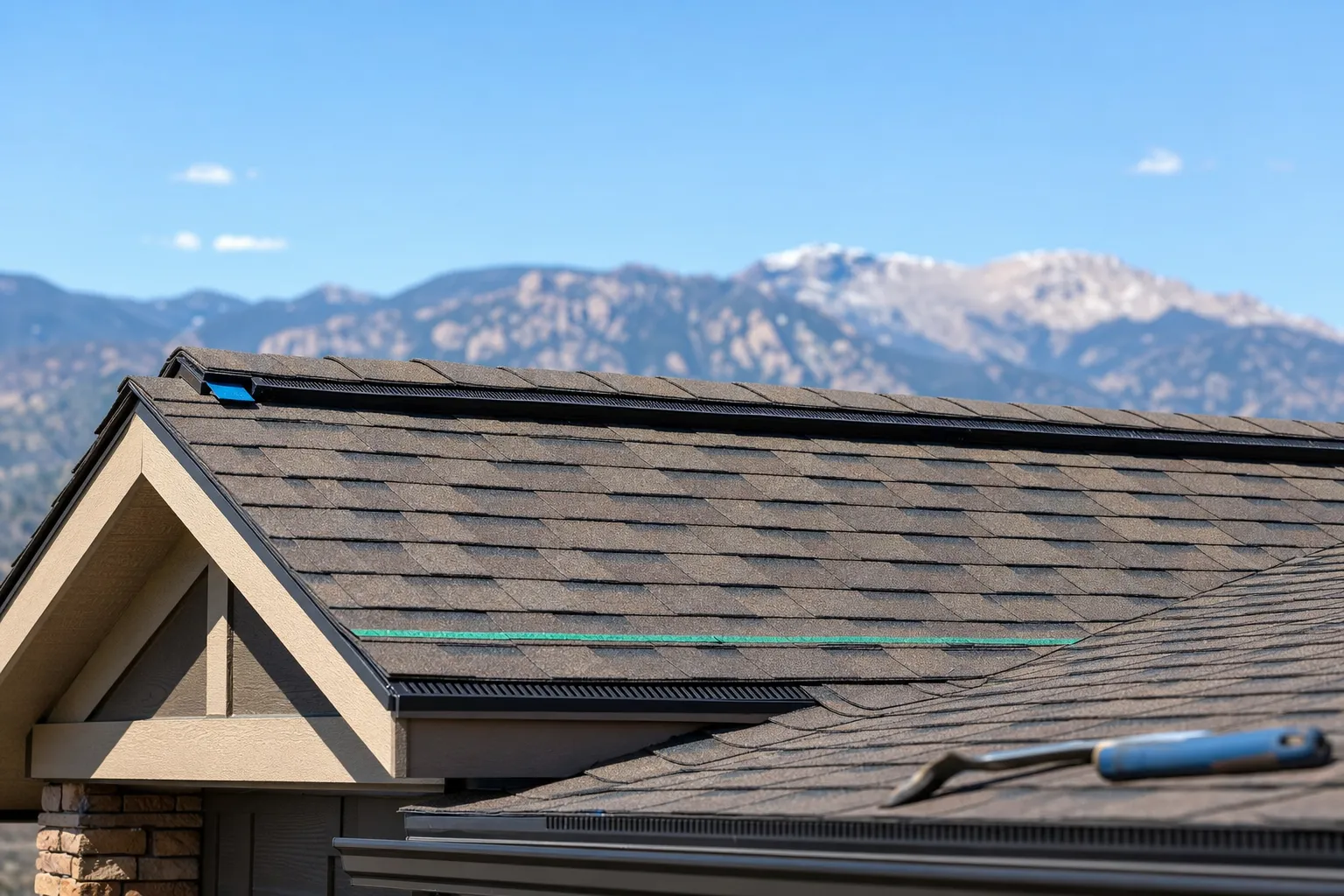
Ask early whether the roofing repair will include a ventilation assessment and what a proper ventilation fix looks like. Good roof ventilation is about balance, airflow paths and matching vents to your attic and insulation, and getting it right during roofing work prevents moisture problems, ice dams and premature shingle wear.
Below we give the specific questions to ask before you start roofing repair in the Air Force Academy area, explain why they matter in our mountain climate, outline how we evaluate ventilation during a roof job, and highlight warning signs and quality markers you should expect from a contractor.
Why roof ventilation matters in the Air Force Academy climate
Roof ventilation controls attic temperature and moisture. In Colorado Springs and the Air Force Academy neighborhood, we see large daily temperature swings, heavy winter snow, and intense sun in summer. Those conditions make ventilation important for several reasons.
- Winter ice dams form when attic heat melts roof snow and water refreezes at the eaves. Proper ventilation keeps the roof surface closer to outdoor temperature and reduces ice dam risk.
- Moisture from showers, cooking and laundry rises into the attic. Without ventilation, trapped moisture can lead to mold, rot and reduced insulation performance.
- Hot attics shorten shingle life and raise cooling costs. Ventilation together with insulation helps your roof and HVAC system last longer.
Standards for ventilation are described by building science references. For a general overview of roof ventilation, see the Wikipedia entry on roof ventilation and for practical guidance on attic venting see the U.S. Department of Energy site on ventilating attics and roofs.
Direct questions to ask before work begins
Bring these questions to a prework conversation or inspection. They are designed to reveal whether the contractor understands ventilation tradeoffs and how ventilation will be addressed as part of the roofing repair.
- Will you inspect the attic as part of the roof repair? A proper ventilation plan starts with an attic inspection to check insulation levels, existing vents, and signs of moisture or rot.
- What ventilation strategy do you recommend for my roof shape and attic? Different roofs need different solutions. A low slope, cathedral ceiling or multiple dormers change the approach.
- How will you achieve balanced airflow between intake at the eaves and exhaust at the ridge or roof vents? Intake and exhaust must match to move air through the attic effectively.
- Will you include sealing and insulation work that affects ventilation? Air leaks from living spaces can overwhelm ventilation and should be sealed before or during the job.
- Which vent types do you plan to use and why? Ask about soffit vents, continuous ridge vents, box vents, and powered vents. Each has pros and cons depending on the roof.
- Will any new ventilation change the roof flashing, drip edge, or warranty coverage? Modifications near roof edges can affect flashing details and manufacturer requirements.
- Do you follow current code or industry guidance for net free ventilation area? The contractor should reference relevant code or technical guidance when calculating vent sizes.
- How will you document the existing condition and the work completed? Photographs and a simple written note about vents, insulation, and attic condition help with future maintenance and insurance claims.
How we evaluate roof ventilation during a roofing repair
When we assess your roof, we follow a repeatable process that checks both the structure and the environment. We do not publish detailed repair instructions, but we will describe the decision points you should expect.
- Attic inspection. We look at insulation depth and type, visible air leaks, roof sheathing condition and any signs of water or mold.
- Vent inventory. We count intake vents at the eaves and exhaust vents at the ridge or roof plane, and we estimate net free area to check balance.
- Thermal and moisture patterns. When possible, we note warm spots, frost lines, or staining that indicate poor airflow or chronic condensation.
- Fit for roof geometry. We match vent types to roof features. For example, continuous ridge vents work well on long ridges, while multiple gables may need attention at each peak.
- Interaction with insulation and air sealing. If attic air is escaping from living spaces, ventilation alone will not solve moisture problems. We recommend sealing gaps and ensuring insulation performance works with the venting plan.
We perform this evaluation on every roofing repair job we manage in the Air Force Academy area so ventilation is accounted for when roof materials are replaced or repaired.
Common ventilation fixes and what they mean for your repair
Here are typical outcomes you may see after an evaluation. We explain what each fix aims to solve and what tradeoffs to expect.
- Add or replace soffit vents. Increases intake at the eaves. Works only if soffit cavities are clear and connected to the attic space.
- Install continuous ridge vent. Provides even exhaust along the peak. It requires a clear ridge and proper baffle installation to avoid wind driven leaks.
- Balance with additional intake or exhaust vents. Adding vents on one plane without matching them can reduce effectiveness.
- Air sealing and insulation upgrades. Reduces warm, moist air entering the attic. It is often the highest value complement to ventilation work.
- Avoid powered vents unless necessary. Turbine or powered fans can help in limited cases but may interfere with passive balance and can draw conditioned air from living spaces if attic air sealing is poor.
Watch out: A contractor who installs vents without inspecting the attic, checking insulation, or addressing air leaks is likely doing incomplete work. Ventilation and insulation must be considered together.
Quality markers and documentation to expect
When roofing repair includes ventilation, here is what good work looks like. Use these markers when you compare assessments or bids.
- Photographs of the attic before and after work, showing vent locations and insulation condition.
- A written note or sketch showing how intake and exhaust balance was calculated.
- Clear explanation of vent type selection and how it fits roof geometry and local climate.
- Recommendations for related repairs, such as damaged sheathing or mold remediation, rather than temporary fixes.
- Instructions for seasonal checks you or a property manager should perform.
Questions and choices for common vent types
Different vent types are appropriate in different situations. Ask these focused questions when a contractor recommends a specific vent.
- Soffit vents. Are the soffit cavities continuous and free of insulation blockage? Continuous soffit intake is most effective when air can flow into the attic unimpeded.
- Ridge vents. Will you use a baffle system to keep insulation away from the vent? Ridge vents need a clear airflow path to function.
- Box or roof vents. Are these being added to supplement exhaust only after intake capacity is confirmed? Scattered roof vents can work but they require careful planning.
- Powered vents. Is there a plan to prevent conditioned air loss from the living space? Powered vents can help with peak moisture, but only after air sealing is fixed.
How ventilation affects warranties, insurance and long term performance
Manufacturer shingle warranties and some insurance considerations reference proper attic ventilation and installation practices. Ask whether the ventilation work will change how a shingle warranty applies and whether documented repairs will help with future insurance inspections.
We document ventilation work and materials so you have a record. If you manage rentals or a vacation property near the academy, clear documentation helps with turnovers and insurance claims.
Practical checklist before you commit to roofing repair
Prework checklist
- Confirm the contractor will inspect the attic and provide photos.
- Ask for an explanation of the chosen vent types and the expected airflow balance.
- Request a list of related repairs that affect ventilation, such as soffit replacement or insulation sealing.
- Ensure the contractor will note any existing wood rot, mold or sheathing damage discovered during the inspection.
- Get a simple maintenance checklist for seasonal checks after the work is done.
Pro tip: If you manage a rental near the Air Force Academy, include attic ventilation checks in your turnover procedures. Proper ventilation reduces call backs for moisture and leak complaints.
How this ties into related work we do
Roof ventilation is usually part of broader repairs we handle. When a roofing repair uncovers interior damage we coordinate drywall repair or insulation work, and when needed we manage related trades. For questions about leak causes and how a roof repair may overlap with interior fixes, see our topic on leak diagnosis. For our roofing repair services, see our Roofing Repair service page. If you are in the Air Force Academy area, our local information is on our Air Force Academy location page.
Key takeaway
Ask whether ventilation is being inspected and addressed during roofing repair, how intake and exhaust are balanced, and what documentation you will receive. In our mountain climate, ventilation affects ice daming, moisture control and shingle longevity, so it is essential to include ventilation in the repair scope.
Frequently asked questions
Do attic vents prevent ice dams?
Proper ventilation helps reduce ice dams by keeping the roof deck temperature closer to outside temperatures, which limits melting and refreezing at the eaves. Ventilation is most effective when combined with adequate insulation and air sealing to stop warm attic air from warming the roof deck.
Can I add a few roof vents instead of replacing the ridge vent?
Adding vents without ensuring balanced intake and exhaust can be ineffective. We usually recommend an approach that restores balanced airflow, which may include soffit intake work in addition to any new exhaust vents.
Will ventilation fixes be part of a typical roofing repair?
Not always. Some repairs only replace shingles. We advise that any roof repair include a ventilation check because shingle replacement is an efficient time to address vents, baffles and insulation access.
What signs in my attic suggest ventilation problems?
Look for dark staining on roof sheathing, frost in winter, sagging insulation, persistent mold, or warm spots on the roof deck. These indicate that ventilation and air sealing need attention.
Where can I read guidance on venting standards?
For background information, see the U.S. Department of Energy guide on ventilating attics and roofs and general technical context on roof ventilation from Wikipedia.
Where to get local information and next steps
Read our Roofing Repair service page to see how we include ventilation in repair work, and visit our Air Force Academy location page for local details and service area information. Check our topic on leak diagnosis for related troubleshooting and documentation practices. You can also look up our Google Business Profile to read customer reviews and get directions.